Understanding Layer 3 Blockchain Solutions
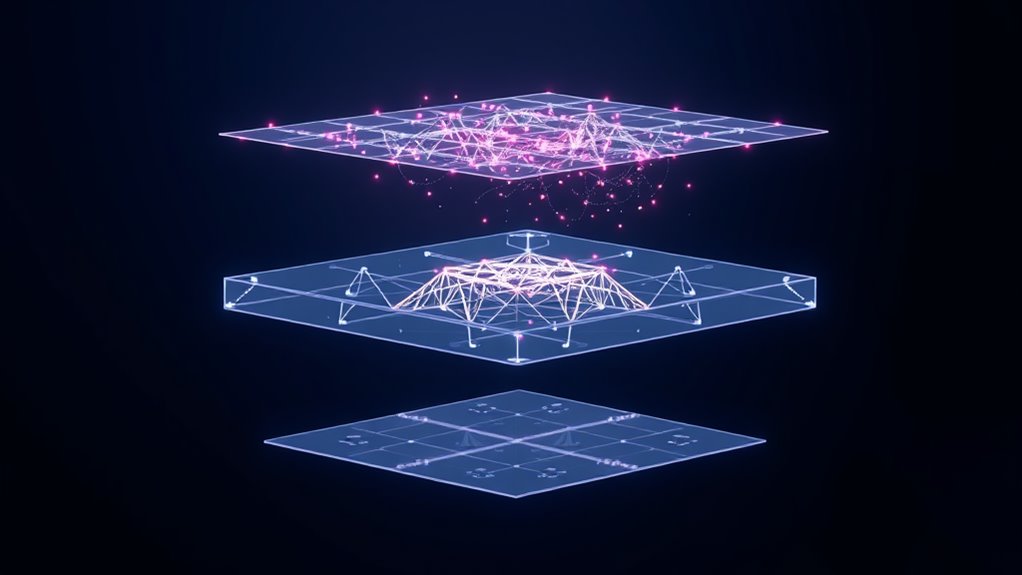
Layer 3 blockchain solutions go beyond mere scaling. They sit atop Layer 1 and Layer 2, focusing on interoperability and specialized functions. Think of them as traffic controllers for blockchain data. They’re creating new capabilities, not just speeding up old ones. Users benefit from cross-chain operations in DeFi, gaming, and enterprise applications. Layer 3 solutions like Orbs connect isolated ecosystems through standardized protocols. Sure, they’re complex—but that’s the price of true blockchain connectivity. The technical evolution continues.
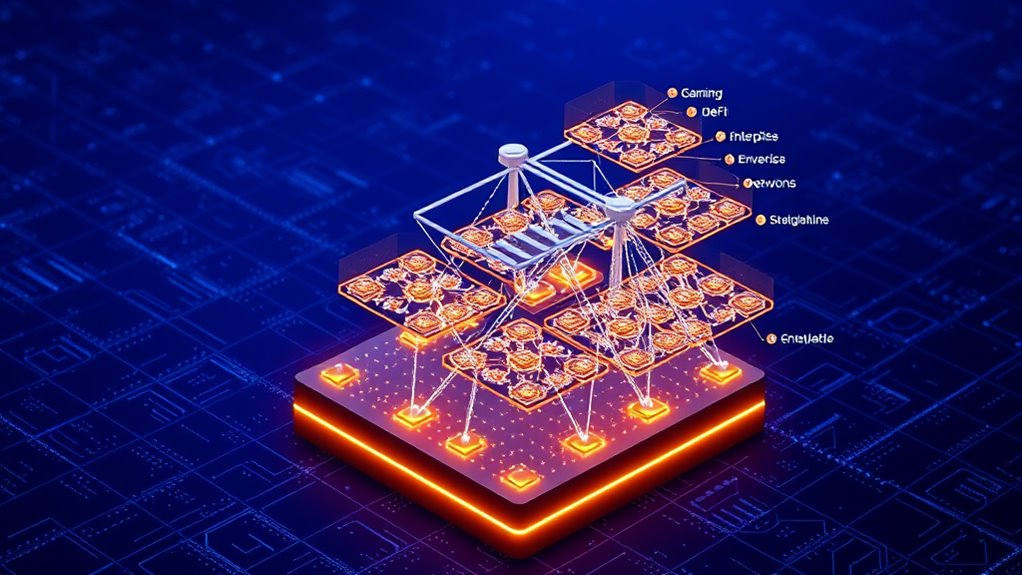
While blockchain technology continues to evolve at breakneck speed, Layer 3 solutions have emerged as the application layer that’s changing the game entirely. Sitting atop Layer 1 and Layer 2 infrastructure, these solutions focus on interoperability and specialized services rather than just scalability. They’re not trying to be faster versions of existing chains; they’re creating entirely new functionality. And frankly, the blockchain world needed this badly.
Layer 3 operates through sidechains and off-chain networks, processing transactions externally to reduce the burden on main chains. It’s like having a personal assistant handle your errands while you focus on important work. These solutions integrate with Layer 2 rollups to leverage their scalability advantages, then add that vital interoperability layer. The result? Assets and data can finally move between blockchains without the usual headaches.
Layer 3 is the blockchain’s traffic controller—directing data, resources, and assets precisely where they need to go without the mainnet even breaking a sweat.
The benefits are substantial. Enhanced scalability? Check. Cost efficiency? Absolutely. But the real magic lies in customization. Layer 3 solutions are tailored for specific use cases—gaming, DeFi, enterprise applications. They provide improved user experience by abstracting technical complexities while maintaining decentralization. They inherit security from lower layers while introducing their own measures. User experience improves dramatically. No more explaining to your friends why they need five different wallets to use three dApps.
Real-world applications are already showing promise. DeFi protocols now enable cross-chain lending and trading. NFT marketplaces allow seamless token transfers between platforms. Gaming economies operate across multiple blockchains. Even enterprises are jumping in, using Layer 3 for supply chain management and compliance. Notable examples like Orbs and Arbitrum are pioneering this revolutionary blockchain landscape by supporting diverse applications.
Cross-chain bridges form the backbone of this interoperability revolution, connecting previously isolated ecosystems like Ethereum and Solana. They’re creating standardized protocols for communication and building decentralized identity systems that work across multiple chains. Multi-chain dApps are becoming the norm, not the exception. Despite their advantages, Layer 3 solutions face challenges due to their greater complexity compared to simpler Layer 2 implementations.
Yeah, blockchain technology is complicated. But Layer 3 solutions are making it usable for real people with real problems. And that’s the whole point, isn’t it?
Frequently Asked Questions
How Do Layer 3 Solutions Impact Blockchain Energy Consumption?
Layer 3 solutions slash blockchain energy consumption dramatically. They process transactions off-chain, avoiding the power-hungry main network. No more massive energy bills.
These systems typically use Proof-of-Stake instead of the electricity-guzzling Proof-of-Work. Smart move.
By building on Layer 2 infrastructure like rollups and sidechains, they create a multi-layered approach to efficiency. The result? Minimal carbon footprint. Blockchain without the guilt.
Energy consumption becomes practically an afterthought.
Can Layer 3 Blockchains Exist Without Layer 2 Infrastructure?
Technically, Layer 3 blockchains could exist without Layer 2, but it’s not practical.
They’d need to reinvent the wheel. Layer 2 provides the essential scaling infrastructure Layer 3 builds upon. Without it, Layer 3 solutions would have to implement their own rollups and state channels—basically becoming Layer 2 themselves.
Industry trends show Layer 3 development assumes Layer 2’s existence. It’s like trying to build a penthouse without the middle floors. Possible? Sure. Smart? Not really.
What Programming Languages Are Best for Layer 3 Development?
For Layer 3 development, Rust leads the pack. Its memory safety and WebAssembly compatibility make it perfect for cross-chain operations.
Go comes in strong too—those goroutines handle parallel transactions like a boss. Ethereum developers stick with Solidity (obviously).
Truth is, language choice depends on your Layer 3’s purpose. Cross-chain stuff? Rust. Need Ethereum compatibility? Solidity’s your only option. Speed critical? Go might be your best bet. No one-size-fits-all here.
How Do Layer 3 Solutions Handle Cross-Chain Communication Security?
Layer 3 solutions leverage advanced cross-chain communication protocols like IBC with cryptographic proofs for secure asset transfers. They implement rigorous smart contract audits to catch vulnerabilities before deployment.
Multi-layered validation guarantees transaction finality across chains. Not perfect though – increased abstraction creates bigger attack surfaces. Layer 3’s complexity demands constant security reviews.
Most implementations use Layer 1 security inheritance as a foundation, then add customized security measures on top. Cross-chain bridges remain a critical (and sometimes vulnerable) component.
Are There Regulatory Challenges Specific to Layer 3 Blockchain Technology?
Layer 3 solutions face a regulatory minefield. Privacy features clash with GDPR and KYC requirements—tough luck for zero-knowledge projects like Aztec.
Cross-chain operations? Even worse. Different jurisdictions, different rules. No standardization. Compliance becomes a nightmare across multiple blockchains.
Centralized governance structures attract unwanted regulatory attention. Data privacy regulations vary globally, creating headaches for developers.
The regulatory landscape is evolving just as fast as the tech itself. Not pretty.
Layer 3 solutions build upon existing infrastructure to enhance digital asset blockchain networks with improved scalability and specialized functionality.
Layer 3 solutions enable more sophisticated blockchain monetary systems by providing enhanced scalability and programmability for complex financial applications.
Layer 3 blockchains enable developers to build specialized digital asset solutions that offer enhanced scalability and customized functionality for specific use cases.
Layer 3 solutions enhance scalability and interoperability, making blockchain monetary systems more efficient for everyday transactions and financial applications.