The Top 5 Decentralized Exchanges for Crypto Trading
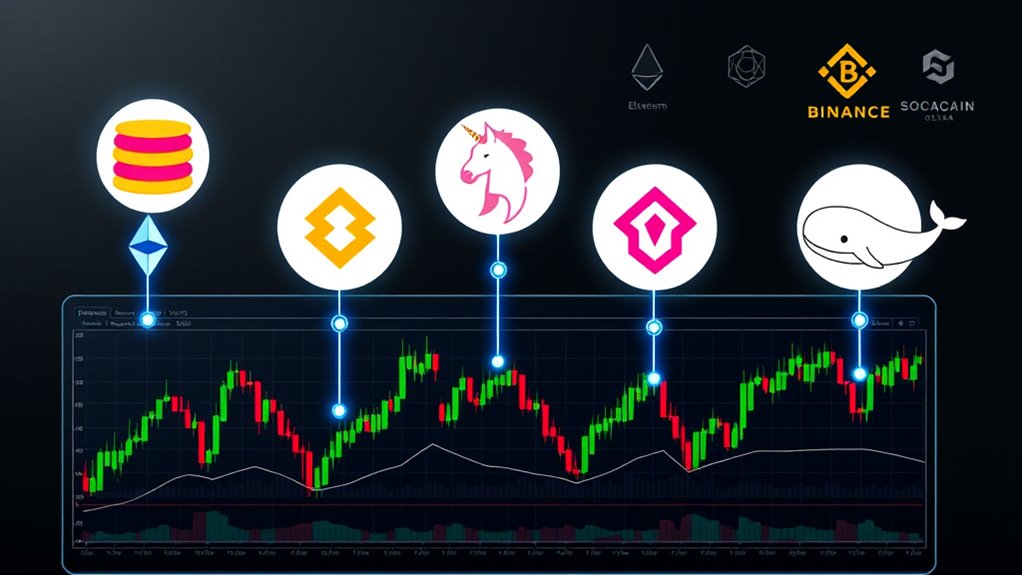
The top decentralized exchanges dominating crypto trading are PancakeSwap V3 (BSC) with $695.6 million daily volume, Uniswap V3 (Ethereum) at $645.3 million, Aerodrome SlipStream, Raydium, and Orca. No middlemen, no KYC—just pure trading in the financial wild west. PancakeSwap’s breakfast food branding stands out while Solana-based DEXs collectively control 48% of total volume. Each platform leverages its native blockchain’s strengths. The crypto revolution continues beyond traditional finance’s boundaries.

Freedom in the crypto world comes with options. Traders have flocked to decentralized exchanges (DEXs) as alternatives to centralized platforms. No middlemen. No KYC headaches. Just you and your digital assets playing in the wild west of finance.
PancakeSwap V3 currently dominates the DEX landscape with a whopping $695.6 million in 24-hour trading volume. Operating on Binance Smart Chain, it’s attracted users with lower fees and high liquidity. Not too shabby for a platform named after breakfast food.
Right behind it sits Uniswap V3, the Ethereum heavyweight, processing $645.3 million daily. Uniswap pioneered the Automated Market Maker model that revolutionized token swapping. It’s basically the grandparent of DEXs at this point. These platforms offer both spot markets and futures trading options for different trading styles.
Uniswap V3 isn’t just an exchange—it’s the blueprint that changed DeFi forever, processing crypto fortunes while others take notes.
Aerodrome SlipStream has secured the third position in the volume rankings. This Ethereum-based aggregator employs its SlipStream protocol to optimize trades. Smart. Efficient. Gets the job done.
The Solana ecosystem boasts two major players: Raydium and Orca. Raydium cleverly combines Serum’s order book functionality with AMM liquidity pools. Orca rounds out the top five, helping Solana-based DEXs control a staggering 48% of total DEX trading volume. That’s nearly half the pie, folks.
Each exchange brings something unique to the table. Uniswap offers unmatched ERC-20 support with a clean interface even your grandmother could navigate. PancakeSwap focuses on BSC with those fees that won’t make you cry.
Raydium leverages Solana’s speed for lightning-fast trades. Aggregators like 1inch and Aerodrome split transactions across multiple DEXs for the best rates. Nobody likes overpaying.
The blockchain diversity is remarkable. Ethereum hosts Uniswap and Aerodrome. BSC has PancakeSwap dominating its ecosystem. Solana supports Raydium and Orca. Many users prefer DEXs for their enhanced privacy and security compared to centralized exchanges that store sensitive personal data. Even Layer 2 solutions like Arbitrum and Optimism have joined the party with SushiSwap V3 and Solidly V3, respectively. Curve Finance stands out as a specialized platform that provides low slippage for stablecoin swaps in the DeFi ecosystem.
Options everywhere. Take your pick.
Frequently Asked Questions
Are Decentralized Exchanges Regulated by Government Financial Authorities?
Decentralized exchanges exist in a regulatory gray area. Most financial authorities haven’t figured out how to properly regulate DEXs since there’s no central entity to hold accountable.
Traditional enforcement models fail without custodians. Some countries are trying, though. They’re experimenting with profit-based enforcement or anti-fraud authorities instead of full oversight.
The lack of intermediaries makes applying AML/KYC requirements nearly impossible. Regulators are scrambling to catch up, but DEXs remain largely unchecked.
For now.
How Do Gas Fees Affect Trading on Decentralized Exchanges?
Gas fees hit DEX traders hard. During network congestion, these transaction costs skyrocket—sometimes exceeding the actual trade value.
Small investors? Completely priced out. Traders flee to cheaper blockchains like Solana or Avalanche when Ethereum fees surge. Some wait for off-peak hours to save money.
Layer 2 solutions help, but fees remain unpredictable. It’s a constant headache.
The crypto dream of accessible trading? Not so much when gas fees enter the chat.
Can I Recover My Funds if I Make a Mistake?
Recovery options are limited with crypto mistakes. Wrong address? Probably gone forever. Period.
Some scenarios offer hope—Coinbase’s ERC-20 recovery tool might help with certain tokens. Smart contract errors? Good luck.
Sometimes exchanges freeze suspicious transactions if you’re quick enough. But let’s be real—blockchain’s whole thing is irreversibility.
No central authority to call. No “undo” button. Mixers or privacy coins involved? Even worse odds.
Documentation helps, but don’t hold your breath.
What Security Risks Are Unique to Decentralized Exchanges?
DEXs face unique security threats.
Smart contract bugs can drain millions instantly – just ask victims of past exploits.
Front-running is rampant, with bots snatching $100M+ from trades.
Unlike centralized exchanges, there’s no safety net if you lose your keys. Period.
Self-custody is both feature and bug.
Plus, those interconnected protocols? One fails, dominoes fall.
Low liquidity means price manipulation happens. A lot.
Those open-source contracts? Double-edged sword when hackers study them.
How Do DEX Liquidity Pools Compare to Centralized Exchange Liquidity?
DEX liquidity pools rely on user-contributed funds in smart contracts, while CEX liquidity comes from centralized order books. This fundamental difference matters.
CEXs typically offer deeper liquidity, supporting large trades with minimal slippage. DEX pools? Often fragmented across platforms. Great for decentralization enthusiasts, not so much for whales making massive trades.
CEXs excel at institutional volume and advanced trading features. DEXs struggle with niche tokens but offer permissionless access.
Both have their place. Economics always wins.
Decentralized exchanges have revolutionized digital asset trading by eliminating intermediaries and giving users complete control over their cryptocurrency transactions.
Decentralized exchanges are becoming the cornerstone of decentralized monetary systems, offering traders unprecedented control over their digital assets.
Decentralized exchanges have become essential infrastructure components that support the growth and stability of modern crypto monetary systems worldwide.