Secure Your Crypto Account With Two-Factor Authentication
You’ve invested time and money into building your cryptocurrency portfolio. Now it’s time to take the necessary steps to protect your digital assets. One of the most vital security measures you can implement is two-factor authentication (2FA). By adding this extra layer of authentication, you can considerably reduce the risk of unauthorized access and theft, even if your password is compromised. Discover the different 2FA methods available and learn how to choose the best option to safeguard your crypto account.
Key Takeaways
- Adopt two-factor authentication (2FA) as an essential security measure to protect your cryptocurrency accounts from unauthorized access and theft.
- Use hardware security keys, authenticator apps, or biometric authentication for enhanced security beyond just password-based protection.
- Avoid relying solely on SMS-based 2FA, as it is vulnerable to sophisticated attacks that can bypass this method.
- Implement multi-factor authentication (MFA) to further strengthen the security of your crypto-related actions, such as sending, withdrawing, and whitelisting.
- Regularly review and update your 2FA methods to stay ahead of evolving cybersecurity threats and ensure the safety of your digital assets.
Understanding Two-Factor Authentication
When it comes to securing your crypto account, one of the most effective measures you can take is enabling two-factor authentication (2FA). 2FA is an additional security layer that requires a one-time code, in addition to your password, to access your account. This unique 6-digit code is generated by an authenticator app or sent to your registered mobile device, providing an extra layer of protection against unauthorized access.
The Importance of 2FA in Cryptocurrency
With cybercriminals frequently targeting cryptocurrency accounts, two-factor authentication (2FA) is an essential security measure for all crypto users. 2FA adds an extra layer of protection beyond just a password, considerably reducing the risk of unauthorized access and theft of your digital assets. Properly implementing 2FA, whether through SMS codes, mobile app codes, or biometrics, is pivotal for safeguarding the value and anonymity of your cryptocurrencies.
Crypto Accounts Security
As cryptocurrency holdings continue to rise in value, your crypto accounts have become prime targets for cybercriminals. Two-Factor Authentication (2FA) is an indispensable security measure to protect your digital assets. 2FA requires two distinct forms of verification, such as a password and a one-time code, preventing unauthorized access even if your password is compromised.
Common 2FA methods for crypto include SMS codes, mobile authenticator apps, and hardware security tokens. While SMS is less secure, authenticator apps and hardware tokens provide stronger protection. Enabling 2FA on all your crypto accounts, including wallets and exchanges, is an essential step to safeguard your digital assets against theft and unauthorized access.
Significance of 2FA
The significance of two-factor authentication (2FA) cannot be overstated for cryptocurrency users. 2FA adds an extra layer of security beyond just a password, reducing the risks of unauthorized access and account compromise. Common 2FA methods include SMS codes, mobile app codes, and biometric authentication, each offering varying levels of security. Enabling 2FA is essential for protecting sensitive crypto-related actions, such as sending, withdrawing, and whitelisting wallet addresses. 2FA also enhances account recovery, making it harder for cybercriminals to gain access. Adopting robust security measures like Multi-Factor Authentication (MFA) and security tokens can further safeguard additional users’ crypto assets. By incorporating 2FA, cryptocurrency holders can considerably reduce the risks associated with their digital holdings.
Preventing Account Breaches
Cryptocurrency accounts have become prime targets for cybercriminals, making two-factor authentication (2FA) an essential security measure to safeguard your digital assets. 2FA adds an extra layer of protection beyond just a password, requiring a one-time code in addition to your login credentials to perform sensitive actions like withdrawing funds or changing account settings. Common 2FA methods for cryptocurrency include mobile authenticator apps, SMS codes, and biometric verification, each providing an additional layer of security. While 2FA is not foolproof, it notably reduces the risk of account compromise by requiring multiple authentication factors. Enabling 2FA is a vital step in securing your cryptocurrency account, helping to protect the value and anonymity of your digital assets.
Different Methods of 2FA
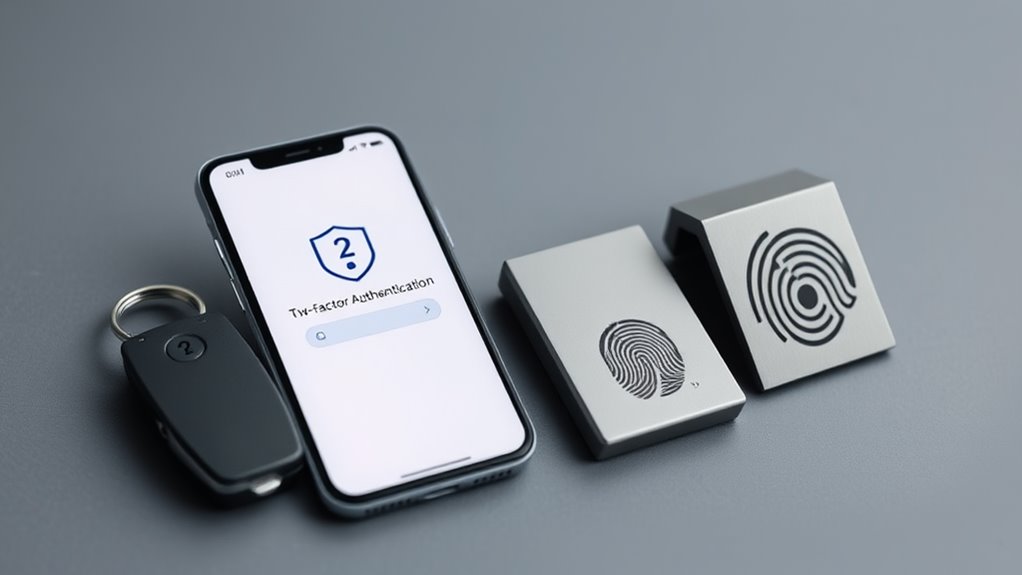
While SMS-based codes may seem like a convenient option for two-factor authentication (2FA), they’re actually less secure due to risks like interception and SIM swapping. Instead, consider using mobile authenticator apps that generate time-based codes for more secure 2FA. Email-based verification also relies on securing your email account as another authentication factor. For the highest level of security, hardware security tokens provide an added layer of protection, though they can be more costly. Biometric verification using fingerprints or facial recognition offers a convenient and secure 2FA option as well.
| Method | Security | Convenience | Cost |
|---|---|---|---|
| SMS-based Codes | Low | High | Low |
| Authenticator Apps | High | Medium | Low |
| Email Verification | Medium | High | Low |
| Hardware Tokens | High | Low | Medium |
| Biometrics | High | High | Medium |

The Limitations of 2FA
Secure two-factor authentication (2FA) may seem like the perfect solution to safeguard your crypto account, but it is vital to understand its limitations. While 2FA adds an additional layer of security by requiring two forms of verification, it can still be bypassed through sophisticated attacks. Attackers can exploit recovery processes to regain access, capture timing-based codes, or intercept SMS-based one-time codes through SIM swapping. Even hardware security tokens can be lost or stolen, with the replacement process potentially introducing new security risks. To prevent unauthorized access, you should consider using additional security measures beyond just 2FA, such as a registered email or physical devices.
Choosing the Right 2FA Method
When it comes to securing your crypto account, you have several 2FA options to ponder. Hardware security keys offer premier protection, though they may be more expensive and less convenient than authenticator apps, which generate unique passwords for each login and strike a strong balance between security and usability. Avoid relying solely on SMS-based 2FA, as it’s less secure due to risks like SIM swapping.
Hardware Security Keys
Hardware security keys are a highly recommended 2FA method for safeguarding your crypto account. These devices generate unique one-time codes for each login, making them immune to phishing, malware, and other software-based attacks that can compromise other 2FA methods like Google Authenticator. With a hardware token, you must physically possess the device to access your account, providing robust protection against unauthorized access. While there may be an initial investment, the increased security and convenience of hardware 2FA make it a worthwhile option for serious crypto investors. Popular choices include Yubikey, Trezor, and Ledger Nano devices, which generate One-time Passwords to help prevent Multi-Factor Authentication (MFA) vulnerabilities.
Authenticator App Advantages
While hardware security keys offer robust protection, authenticator apps provide an accessible and highly secure 2FA option for your crypto account. Authenticator apps generate unique, time-sensitive codes that are immune to SIM swapping or other vulnerabilities affecting SMS-based 2FA. They allow you to securely store your 2FA credentials, enabling access from multiple devices. Authy’s multi-device support and encrypted cloud backups add an extra layer of security and convenience. Authenticator apps are considered one of the most secure 2FA methods, making them a recommended choice for protecting your crypto wallets. Users receive a QR code to set up the app, and can use biometric authentication for certain actions, enhancing the user experience.
Avoiding SMS-based 2FA
The days of relying on SMS-based two-factor authentication (2FA) for your crypto account are over. While once considered a standard security measure, SMS 2FA is now known to be vulnerable to SIM swapping and spoofing attacks. Instead, you should opt for more secure 2FA methods:
- Authenticator apps that generate time-based one-time passwords (TOTP).
- Hardware security keys that produce unique codes for each login.
- Biometric verification like fingerprint or facial recognition.
- Avoiding using the same authentication method for both sign-in and sensitive account actions.
Keep in mind that utilizing multiple 2FA factors can provide an additional layer of protection, even if someone gains access to your SMS messages or secret key. Secure your crypto account with the right 2FA solution.
Protecting Against Mobile Vulnerabilities
As mobile devices have become increasingly integral to our daily lives, it is crucial to reevaluate the security of your crypto account’s authentication methods. The vulnerability of mobile devices means that traditional SMS-based two-factor authentication (2FA) may not provide sufficient protection for your digital assets.
To enhance security, consider fortifying your telecom accounts with a PIN and implementing port/SIM protections to prevent SIM swapping attacks. Additionally, replace SMS-based 2FA with more secure methods, such as authenticator apps or hardware tokens. For added protection, use a dedicated phone number or burner phone exclusively for 2FA. Regularly audit your accounts and update your security practices to stay ahead of evolving mobile threats.
Frequently Asked Questions
What Is Two-Factor Authentication in Crypto?
Two-factor authentication (2FA) in crypto adds an extra layer of security to your account beyond just a password. It requires you to enter a unique, temporary 6-digit code, generated by a Time-based One-time Password (TOTP) algorithm, in addition to your password to access sensitive actions like sending crypto, withdrawals, and whitelisting wallet addresses. By enabling 2FA with an authenticator app like Authy, you can better protect your crypto assets from unauthorized access.
How to Set up 2FA on Crypto?
To set up 2FA on your crypto account, first enable it in the app settings. You’ll need to verify your identity using a passkey or passcode, then scan a QR code or copy a secret key to add the account to an authenticator app like Authy. Once enabled, you’ll need to enter a unique 6-digit code within 30 seconds to complete sensitive actions, providing an extra layer of security beyond just a password.
Does Two-Factor Authentication Protect Your Account?
⚠️ Two-factor authentication (2FA) is the sturdy lock guarding your crypto account’s door. It’s the extra layer of security that keeps your digital assets safe, even if your password is compromised. With 2FA, you’ll need to verify your identity through a one-time code, ensuring only you can access your account. This added step may seem inconvenient, but it’s a small price to pay for the peace of mind of knowing your crypto is protected.
Can I Withdraw From Crypto.Com Without 2FA?
No, you cannot withdraw funds from your Crypto.com account without enabling and using two-factor authentication (2FA). Crypto.com requires 2FA for all withdrawal transactions as a security measure to protect your account. Attempting to withdraw without 2FA will result in the transaction being blocked. Disabling 2FA on your Crypto.com account will prevent you from making any withdrawals, as it is a mandatory feature for all withdrawal activities on the platform.
As crypto monetary systems continue to evolve and gain mainstream adoption, securing your digital assets becomes increasingly critical for investors.
Two-factor authentication has become an essential security measure for protecting digital wallets and maintaining secure monetary systems in the cryptocurrency ecosystem.