Can You Track a Crypto Wallet’s Location?
Crypto wallets don’t have physical locations to track. They exist purely in digital space. What people call “tracking” is actually monitoring transaction activity on the blockchain. Tools like Etherscan reveal wallet movements, not GPS coordinates. Most blockchains are transparent, recording every transaction permanently. Privacy coins and mixing services can obscure these trails, though. Advanced tracking uses behavior analysis and clustering algorithms to group related addresses. Compliance tools help catch criminals, but technical limitations remain significant barriers.
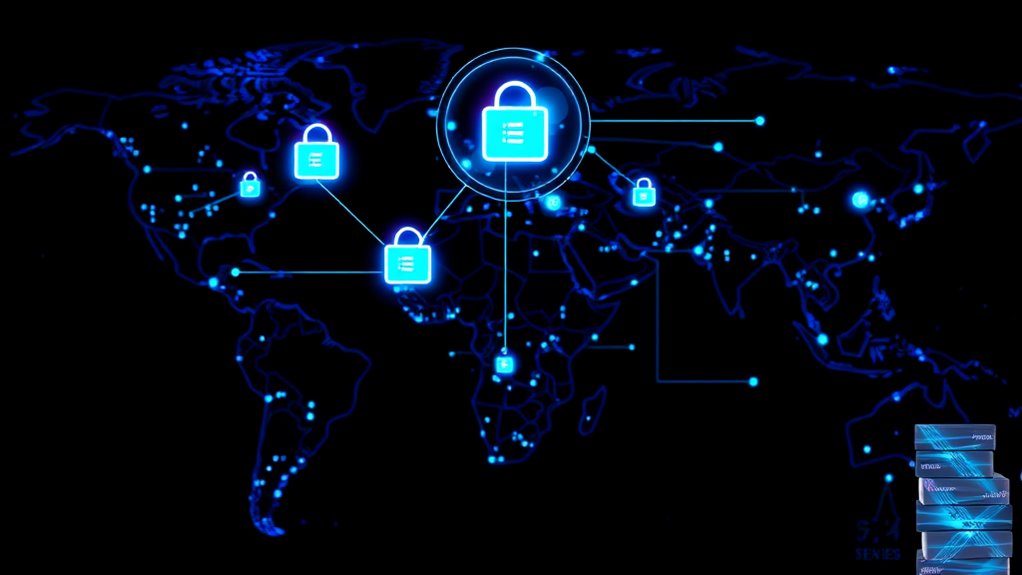
Misconception alert: Crypto wallets don’t have physical locations you can pinpoint on a map. That’s not how blockchain technology works.
When people talk about “tracking a wallet’s location,” they’re actually referring to monitoring its transactions and activities on the blockchain, not finding out where someone keeps their laptop or hardware wallet.
Crypto transactions exist in digital space, recorded on a distributed ledger visible to anyone with internet access. Block explorers like Etherscan serve as windows into this activity. They show when coins move, where they go, and how much is transferred. No GPS coordinates. Just transaction data.
Tools for this kind of tracking are everywhere. Portfolio trackers like Zerion and DeBank let users monitor multiple wallets across different blockchains. On-chain analytics platforms like Chainalysis dig deeper, mapping connections between wallets and identifying patterns. Some services even offer alerts when specific wallets make moves.
But why track wallets anyway? For starters, investors monitor their own portfolios. Researchers analyze market trends. Law enforcement investigates suspicious activity. Compliance teams verify regulatory adherence. The reasons vary widely.
It’s not always easy, though. Privacy coins and mixing services deliberately obscure transaction trails. Decentralized exchanges don’t require identification. Cross-chain bridges complicate tracking efforts. The crypto space values privacy, after all.
The irony? Despite common beliefs about crypto anonymity, most blockchain transactions are actually transparent. Your wallet address is pseudonymous, not anonymous. Every transaction leaves a permanent record. Note that due to new UK rules, certain tracking tools and informational pages may be temporarily unavailable in some regions.
Advanced tracking methods include clustering algorithms that group related addresses and behavior analysis that identifies wallet owners through patterns. Financial institutions implement KYC procedures to verify user identities and reduce fraud risks associated with cryptocurrency transactions. Some businesses use specialized software to track stolen funds or monitor specific addresses of interest. Effective tracking is essential for security and fraud prevention in the cryptocurrency ecosystem.
Bottom line: your crypto wallet isn’t broadcasting its geographic coordinates. But its on-chain activity creates a digital footprint that’s surprisingly trackable.
That transparency is both a feature and a limitation of blockchain technology. Something to remember next time someone mentions “untraceable crypto.”
Frequently Asked Questions
How Can I Verify if a Crypto Wallet Is Legitimate?
Legitimate crypto wallets leave clear footprints.
Check for blue checkmarks on Etherscan, official logos in interfaces, and proper contract addresses.
Download only from official sources—sketchy URLs are a dead giveaway.
Enable 2FA, obviously.
Red flags? Anonymous developers, withdrawal “taxes,” and UI inconsistencies.
Community trust matters. High download counts and authentic reviews tell a story.
Hardware wallets add another layer.
Transparency isn’t optional in crypto—it’s survival.
Can Authorities Track Anonymous Wallets During Criminal Investigations?
Authorities absolutely can track anonymous wallets. Blockchain analysis technologies like Chainalysis follow transaction patterns, cluster related addresses, and identify spending habits.
Seems private? Think again. When criminals slip up, investigators pounce. Exchanges hand over KYC data when subpoenaed, linking addresses to real identities.
Law enforcement agencies coordinate internationally, following the money trail from blockchain to bank accounts. Even “anonymous” wallets leave forensic breadcrumbs that determined investigators can follow.
Privacy coins make it harder—not impossible.
What Privacy-Focused Wallets Offer the Strongest Anonymity Features?
Monero GUI Wallet offers the strongest anonymity features, hands down. Built with mandatory privacy. No opt-in nonsense.
Its ring signatures and stealth addresses hide both sender and recipient completely.
Wasabi and Samourai follow closely with their CoinJoin implementations, though they’re Bitcoin-only.
Zcash uses fancy zero-knowledge proofs but privacy is optional—big drawback.
Arcana avoids KYC but lacks the advanced obfuscation tech of its competitors.
True anonymity requires both network-level protection (Tor) and transaction privacy.
How Do Hardware Wallets Differ From Software Wallets for Security?
Hardware wallets offer superior security by storing private keys offline in secure chips, unlike software wallets that keep keys on internet-connected devices.
Physical security is their biggest advantage. You need the actual device to make transactions—no device, no access. Simple.
Software wallets? Constantly online and vulnerable to remote attacks, phishing, and malware.
Hardware wallets work even when connected to compromised computers, keeping keys isolated. They’re basically digital fortresses with physical gates.
Can Blockchain Analytics Companies Identify Suspicious Transaction Patterns?
Blockchain analytics companies absolutely can identify suspicious patterns. They’ve gotten good at it.
They use clustering techniques to link multiple wallets to single entities and deploy machine learning algorithms that flag anomalous transactions.
Real-time monitoring catches weird activity as it happens. These firms track fund flows, detect mixer usage, and spot connections to known bad actors.
Their visualization tools expose hidden relationships between wallets that criminals thought were separate.
Pretty sophisticated stuff.
Advanced digital asset tracking techniques can reveal patterns and connections between cryptocurrency wallets, though pinpointing exact physical locations remains challenging.
Modern crypto monetary systems were designed with privacy features that make tracking wallet locations significantly more challenging than traditional banking methods.
As cryptocurrencies become more mainstream, digital asset tracking has emerged as a crucial tool for both security professionals and regulatory compliance.
Traditional monetary systems tracking relies on centralized banks, while cryptocurrency presents unique challenges for location identification due to its decentralized nature.