How to Find and Recover Lost Crypto Wallets
Recovering lost crypto wallets isn’t impossible. First, hunt through obvious places: password managers, notebooks, old devices, emails. Look for wallet files or seed phrases—those 12-24 random words keep your crypto alive. Hardware wallets like Ledger store keys offline. For deleted files, data recovery tools might help. Professional services exist but aren’t guaranteed. Prevention beats recovery every time. Store seed phrases in fireproof safes, not Post-it notes. The difference between found and forever-gone crypto often lies in how methodical your search gets.

As cryptocurrency adoption continues to surge worldwide, a staggering $140 billion in Bitcoin sits permanently frozen in digital limbo—all because people can’t access their wallets. Let that sink in. Billions. Gone. Not from hacks or scams, but from simple human error. Forgotten passwords. Misplaced seed phrases. Dead hard drives.
The humble seed phrase stands as the primary gatekeeper to crypto fortunes. These 12-24 word sequences release wallets across any device, which is great—until you lose them. Trust Wallet users can restore access by installing the app and selecting “Add existing wallet,” then entering their seed phrase. Some even back up to Google Drive. Convenient? Sure. Smart? Debatable. Cloud storage is basically a hacker’s playground.
Seed phrases: the magical key to your crypto kingdom—and potentially the trapdoor to financial oblivion.
More sophisticated options exist for the paranoid (or perhaps just prudent). Hardware wallets like Ledger and Trezor store private keys offline. Some advanced wallets implement Shamir’s Secret Sharing, splitting phrases into multiple parts. Social recovery lets trusted contacts collaborate to release wallets. Innovation at its finest—assuming you remembered to set these up before disaster struck.
When the inevitable happens—wallet gone, crypto inaccessible—don’t panic. Yet. First, hunt through every conceivable backup location. Check password managers, old emails, cloud storage. Look for wallet files like “wallet.dat” hiding on old devices. Search through those notebooks you swore you’d organize someday.
For the truly desperate, data recovery tools like Recuva might rescue deleted wallet files. Bitcoin Core users can utilize TestDisk software to scan for and recover corrupted wallet files on their computers. Professional services exist too—companies like KeychainX use forensic methods to crack wallets, though success isn’t guaranteed. The case of Stefan Thomas and his locked IronKey containing 7,002 BTC demonstrates both the stakes and potential for specialized recovery teams. Physical hacking of non-Ledger hardware wallets? Possible, but requires specialized knowledge. Always remember that sharing your seed phrase with anyone, including recovery services, is strictly prohibited for maximum security.
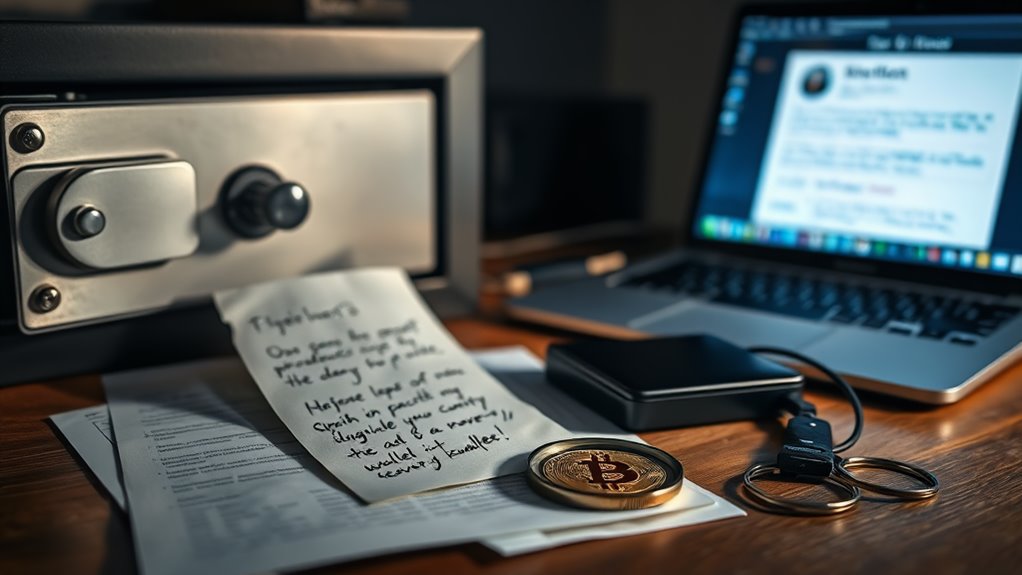
Prevention beats recovery every time. Store seed phrases in fireproof safes, not Post-it notes. Keep encrypted backups on offline drives. Sync wallets across multiple devices. Update wallet software regularly.
Or just write your seed phrase on a sticky note and promptly lose it. Plenty of others already contributed to that $140 billion statistic. What’s a few more coins in the abyss?
Frequently Asked Questions
Can a Hardware Wallet Manufacturer Help Recover Lost PINS?
Hardware wallet manufacturers can’t help recover lost PINs. It’s intentional. They don’t store your PIN anywhere, and there’s no backdoor. Security first, convenience last.
Most devices reset after multiple failed attempts anyway. Ledger? Nine tries. BitBox02? Fifteen.
The only real solution: your seed phrase. Without it, you’re out of luck.
Some companies like Cypherock offer paid recovery services, but they still need your seed.
Are There Recovery Services That Guarantee Finding Lost Crypto Wallets?
Several crypto recovery services operate on a no-recovery-no-fee basis. Companies like Professional Crypto Recovery and Datarecovery.com only charge if successful.
No upfront costs required. Their recovery rates vary widely based on the situation—forgotten passwords? Maybe. Hardware completely melted? Good luck with that.
These services use various techniques: brute-force attacks, data forensics, and specialized hardware repair.
But guarantees? Not absolute. They offer legally binding contracts, but success always depends on your specific circumstances.
What Happens to Lost Crypto When Exchanges Shut Down?
When exchanges shut down, customers’ crypto often vanishes into the digital abyss.
Users become unsecured creditors, fighting for scraps in bankruptcy proceedings. No FDIC insurance here, folks.
Recovery? Maybe 0-142% of holdings, if you’re lucky. The process drags on for years.
FTX customers waited over a year just for a plan. Mt. Gox victims? Still waiting after a decade.
Bottom line: exchanges close, crypto disappears, lawyers get rich.
How Do Inheritance Protocols Work for Crypto Wallets?
Crypto inheritance protocols break down into a few key strategies.
Multisig setups require multiple parties to access funds—no single executor can run off with everything.
Shamir’s Secret Sharing splits your keys into fragments. Pretty clever, actually.
Physical storage (tamper-proof bags, hardware wallets) keeps things offline.
Legal documentation ties it all together.
The real challenge? Finding the balance between security and simplicity.
Too complex and your heirs might never see those coins.
Too simple—hello, theft risk.
Can Quantum Computing Break Into Lost Bitcoin Wallets?
Quantum computing poses a theoretical threat to Bitcoin wallets, but it’s not magic.
Yes, quantum algorithms could potentially crack the cryptography protecting lost wallets—especially those with exposed public keys. The 4 million BTC in vulnerable addresses? Juicy targets.
But realistically, we’re years (possibly decades) away from quantum computers powerful enough to pull this off.
When that day comes, though, those “lost” coins might suddenly become someone else’s treasure. Not today, though.
Each lost digital asset represents a potential fortune that could be recovered with the right tools and systematic approach.
The decentralized nature of crypto monetary systems means that lost wallet access can result in permanently inaccessible funds without proper recovery methods.
Professional digital asset recovery services can help when traditional wallet recovery methods fail or when dealing with complex security scenarios.
Understanding how monetary systems crypto networks operate can help you better comprehend wallet recovery processes and prevent future losses.