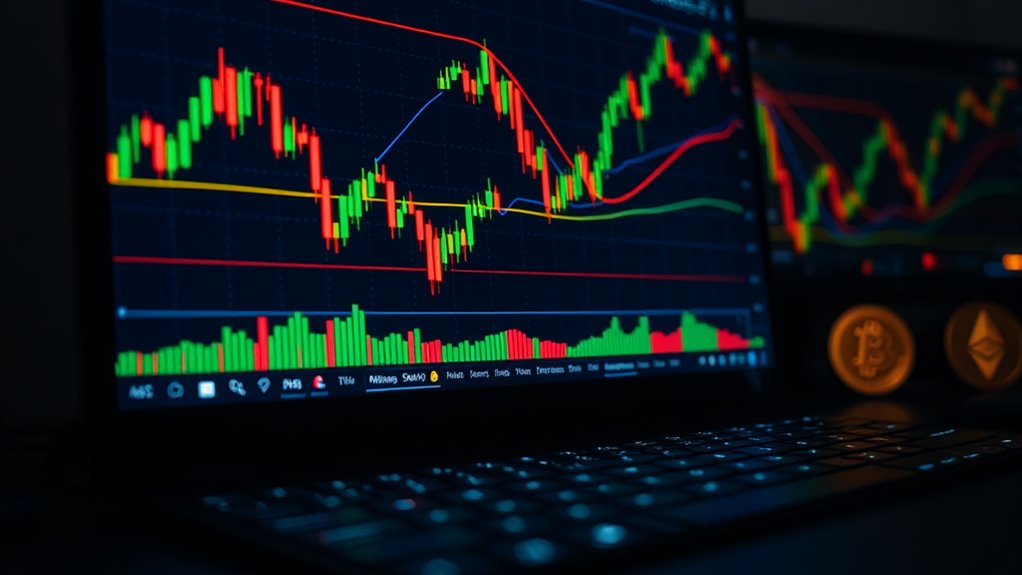
Technical Analysis: Crypto Trading’s Crystal Ball?
Technical analysis isn’t crypto‘s magical crystal ball. It examines price history and volume to spot patterns, nothing more. Traders use it to find structure in chaos through charts, indicators, and support levels. No blockchain knowledge required—just price action. Works for day traders and HODLers alike. Critics say it’s just staring at squiggly lines. Believers swear by it. The truth? It’s a tool, not a fortune teller. The market rarely reveals all its secrets so easily.
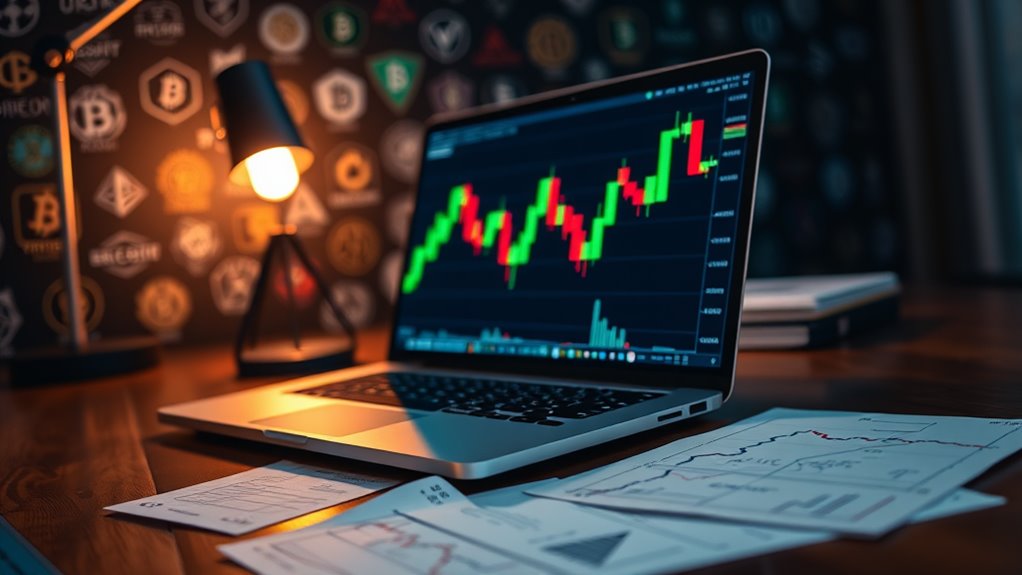
Charts, numbers, and patterns. They’re the backbone of technical analysis in cryptocurrency trading. Traders stare at screens for hours, looking for signs in the digital tea leaves. Technical analysis isn’t magic—it’s a method for evaluating crypto markets using historical price data and volume. Nothing more, nothing less.
Unlike fundamental analysis, which gets bogged down in project details and team credentials, technical analysis cuts through the noise. It focuses solely on price movements. Cold, hard data. The assumption? Everything you need to know is already reflected in the price. Period.
The crypto world loves technical analysis. Makes sense. In markets where prices swing wildly on a Tuesday just because some billionaire tweeted, traders need something—anything—to grab onto. Technical analysis provides structure in chaos.
Price action tells stories. Supporting cast members include market trends, support and resistance levels, and those fancy indicators like RSI and MACD. They all point to the same thing: where prices might go next. Might being the operative word.
History repeats itself—that’s the mantra. What happened before will happen again. Markets discount everything, prices move in trends, and psychology drives predictable patterns. Supply and demand do the rest. Simple, right? Not exactly.
Technical analysis helps traders spot entry and exit points. Essential in crypto, where fortunes change in minutes. It offers a systematic approach, reducing those emotion-driven panic sells at 3 AM. Works across timeframes too—day trading or HODLing. The versatility of technical analysis makes it applicable to various asset classes, not just cryptocurrencies. By using indicators like moving averages, traders can further enhance their market predictions.
Tools aren’t hard to find. TradingView, crypto exchanges, candlestick charts—all accessible with a few clicks. Even beginners can start charting. A comprehensive approach using multiple technical indicators rather than relying on a single tool delivers more reliable market insights.
But there’s a catch. Technical analysis relies on historical data. Past performance doesn’t guarantee future results. Ever. And interpretations vary wildly—five analysts can look at the same chart and see five different futures.
Is technical analysis crypto’s crystal ball? Hardly. But it’s a useful tool in a market where rationality often takes a back seat. Use it. Don’t worship it.
Frequently Asked Questions
Can Technical Analysis Predict Black Swan Events in Crypto Markets?
Technical analysis can’t predict black swan events in crypto markets. Period.
These events are, by definition, unpredictable and rare. Crypto’s volatile world has seen exchange collapses, major hacks, and regulatory crackdowns come out of nowhere.
Charts and patterns? Useless against these shocks. While some fancy AI models try to spot early warning signs, they’re still playing catch-up.
When a true black swan hits, technical analysts are just as blindsided as everyone else.
How Does Technical Analysis Differ Between Stocks and Cryptocurrencies?
Technical analysis works differently in crypto versus stocks. No surprise there.
Crypto’s wild volatility means indicators need faster adjustment – those reliable stock patterns? Not so reliable here.
Crypto charts show erratic movement where stocks follow more predictable patterns. Volume spikes happen suddenly in crypto markets.
Timeframes shrink too – crypto traders focus on minutes and hours while stock analysts think in days and weeks.
And manipulation? Way more common in crypto. Same tools, totally different game.
What Programming Languages Are Best for Automating Technical Analysis?
Python dominates the automation landscape for technical analysis. Period.
Its libraries—Pandas, NumPy, and scikit-learn—handle everything from data crunching to machine learning models with minimal fuss.
JavaScript works for web-based stuff, while Java’s good for enterprise-level systems that can’t fail.
Go (Golang) shines when speed matters. Ruby’s readable but less common.
Each has its place, but Python’s ecosystem is unmatched. Community support seals the deal for most analysts.
No competition, really.
Do Institutional Traders Rely on Technical Analysis for Crypto Investments?
Institutional traders absolutely use technical analysis for crypto, but it’s just one tool in their arsenal. Not the whole show.
They blend it with fundamental analysis, quantitative models, and machine learning systems. Unlike retail traders, institutions deploy sophisticated strategies with advanced tech infrastructure.
They’re analyzing market data at scale. Technical indicators help them spot trends and manage risk, but they’re never making decisions based on chart patterns alone. That’d be amateur hour.
How Accurate Is Technical Analysis During Cryptocurrency Regulatory Announcements?
Technical analysis takes a hit during regulatory announcements. Period.
When governments speak, charts often break down completely. Price patterns that looked promising? Suddenly worthless. The sudden volatility throws indicators into chaos, rendering traditional support and resistance levels meaningless.
Smart traders acknowledge this limitation. Historical data can’t predict how markets will react to new regulations. Some announcements trigger panic selling, others spark relief rallies. It’s a coin toss, really.
Technical analysis works best between regulatory bombshells, not during them.
Technical analysis serves as a cornerstone of digital asset analysis, helping traders identify patterns and potential price movements in volatile cryptocurrency markets.
Technical analysis attempts to predict price movements within crypto monetary systems by studying historical chart patterns and trading volume data.
Technical indicators and chart patterns form the foundation of digital asset analysis, helping traders identify potential price movements in volatile cryptocurrency markets.
Technical analysis has become increasingly sophisticated as monetary systems trading evolves beyond traditional markets into the volatile cryptocurrency landscape.