Digital Signatures: Securing Crypto Transactions
Digital signatures serve as crypto‘s security backbone. They use complex math—specifically ECDSA—to create unforgeable marks of authenticity for every transaction. Private keys sign, public keys verify. No central authority needed. Just pure cryptographic proof that your Bitcoin is actually yours. New developments like Schnorr signatures and multi-sig approaches are making transactions more private and secure. The intersection of math and security extends far beyond just moving money.
Every single crypto transaction relies on an invisible shield of protection—digital signatures. These cryptographic codes aren’t just fancy tech jargon; they’re the backbone of blockchain security. Without them, your Bitcoin would be about as safe as cash left on a park bench. Seriously.
Digital signatures use the Elliptic Curve Digital Signature Algorithm (ECDSA) to create unforgeable marks of authenticity. They’re mathematical marvels. Complex. Secure. Essential. The process involves private keys (which you guard with your life) and public keys (which you can show to anyone). When you initiate a transaction, your private key creates a unique signature. This signature gets verified by nodes across the network using your public key. Magic? Nope. Math. This verification process ensures that transactions are authentic and have not been tampered with.
The beauty of this system? It’s practically impossible to fake. Any tampering with transaction data immediately invalidates the signature. It’s like trying to forge a signature while someone watches you do it. Good luck with that.
Beyond basic security, digital signatures prove ownership. They link transactions to specific addresses, showing the world “this Bitcoin belongs to me.” The network trusts this proof without requiring a central authority. No banks. No middlemen. Just cryptography. These signatures create an immutable audit trail that ensures every transaction can be traced and verified.
The crypto world keeps evolving, though. New signature types like Schnorr offer improved privacy and efficiency. Multi-signature approaches require multiple parties to sign off on transactions—perfect for corporate accounts or shared wallets. Digital signatures utilize sophisticated mathematical algorithms that create a unique encrypted hash, ensuring the integrity of every transaction.
These signatures aren’t just for crypto, either. They’re transforming supply chains, legal documents, secure messaging, and identity verification. The technology that keeps your Bitcoin safe also protects online banking and verifies product authenticity.
Digital signatures represent the intersection of mathematics, cryptography, and practical security. They’re not sexy. They’re not flashy. But they’re the reason you can trust that your crypto will go exactly where you send it—nowhere else. In a digital world full of threats, that’s no small feat.
Frequently Asked Questions
How Secure Are Digital Signatures Against Quantum Computing Threats?
Traditional digital signatures are toast against quantum attacks. Period. RSA and ECC algorithms? Quantum computers will chew them up using Shor’s algorithm. Not today, but soon enough.
Some solutions exist – lattice-based, hash-based, and multivariate polynomial cryptography offer quantum resistance. NIST is working on standards. Google’s already implementing some solutions.
The crypto world better adapt quickly. Quantum computing isn’t science fiction anymore. It’s coming, ready or not.
Can Digital Signatures Be Legally Binding in Court?
Digital signatures are legally binding in court, thanks to the ESIGN Act and UETA. Courts regularly uphold them – with conditions, of course.
The signer must consent to use digital signatures, show clear intent to sign, and verify their identity. Document integrity is non-negotiable.
Blockchain-based signatures are gaining traction too, thanks to their tamper-proof nature. Different jurisdictions have different requirements though. No surprise there.
The legal system finally catching up with technology.
What Happens if I Lose My Private Key?
Losing a private key is brutal. There’s no recovery hotline to call, no password reset button.
Assets linked to that key? Gone forever. Seriously. Like throwing money into a black hole.
Blockchain doesn’t care about your sob story. Lost keys contribute to “dead coins” – permanently inaccessible crypto that still shows up in total supply figures.
Some estimate billions are locked away like this.
Smart people use hardware wallets and backups. Others learn the hard way.
How Do Hardware Wallets Enhance Digital Signature Security?
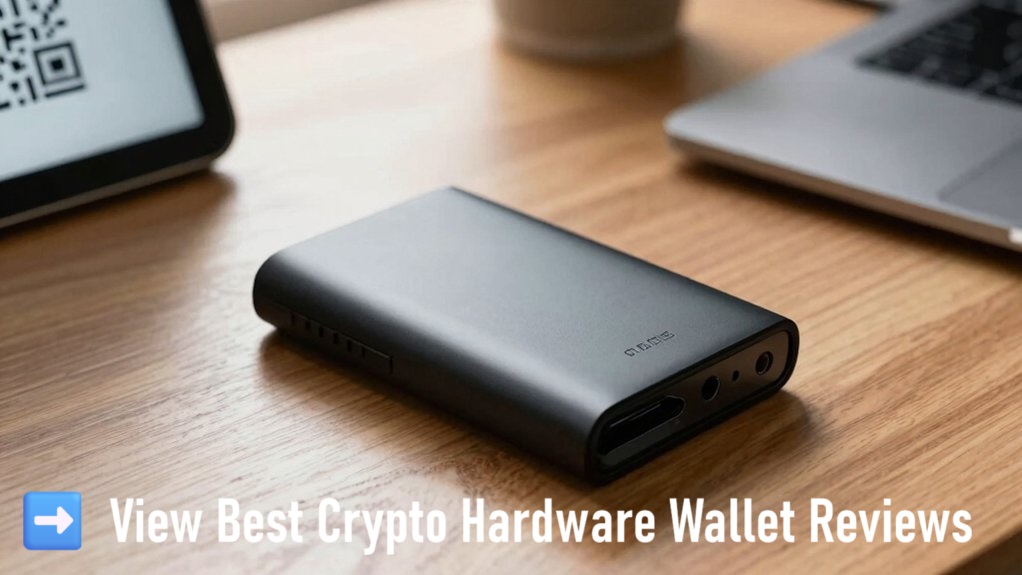
Hardware wallets completely transform digital signature security. By storing private keys offline in secure elements, they’re practically unhackable compared to software wallets.
When signing transactions, the key never leaves the device—period. Users physically verify details on the wallet’s screen before approving. No malware can intercept this process.
Plus, PIN protection and tamper-evident features add extra layers of security. For criminals trying to steal crypto? Hardware wallets are their worst nightmare.
Are Digital Signatures and Wallet Addresses the Same Thing?
No, digital signatures and wallet addresses aren’t the same thing.
Digital signatures authenticate transactions, proving who sent them. Pretty critical security stuff.
Wallet addresses? Just identifiers for sending and receiving crypto.
Think of addresses as your public mailbox number, while signatures are your unique handwriting.
Both use cryptography, but serve different purposes.
Addresses are derived from public keys and visible to everyone.
Signatures use private keys to verify identity.
Different tools, same crypto toolbox.
Digital signatures serve as a fundamental cornerstone of digital asset security, providing cryptographic proof of transaction authenticity and ownership verification.
Digital signatures serve as the cryptographic backbone that ensures authenticity and prevents fraud across all digital monetary systems.
Digital signatures serve as a fundamental component of digital asset security by providing cryptographic proof of transaction authenticity and preventing unauthorized access.
Digital signatures serve as the cryptographic backbone that enables trust and verification within modern digital monetary systems.