Man-in-the-Middle Attacks: A Threat to Crypto Security?
Man-in-the-middle attacks represent a serious crypto security threat. These sneaky invasions intercept communications between parties, allowing hackers to alter transaction addresses before they hit the blockchain. Even hardware wallets aren’t immune. Most users don’t verify addresses before clicking “send”—big mistake. Once funds go to a hacker’s wallet, they’re gone. Public Wi-Fi? Avoid it. Secure connections and multi-factor authentication help, but no solution is bulletproof. The weakest link isn’t the blockchain—it’s you.

While crypto enthusiasts celebrate the security of blockchain technology, a sinister threat lurks in the shadows—man-in-the-middle (MITM) attacks. These attacks involve intercepting and tampering with communications between two parties. Simple concept, devastating consequences. Especially for crypto holders who thought their digital assets were untouchable.
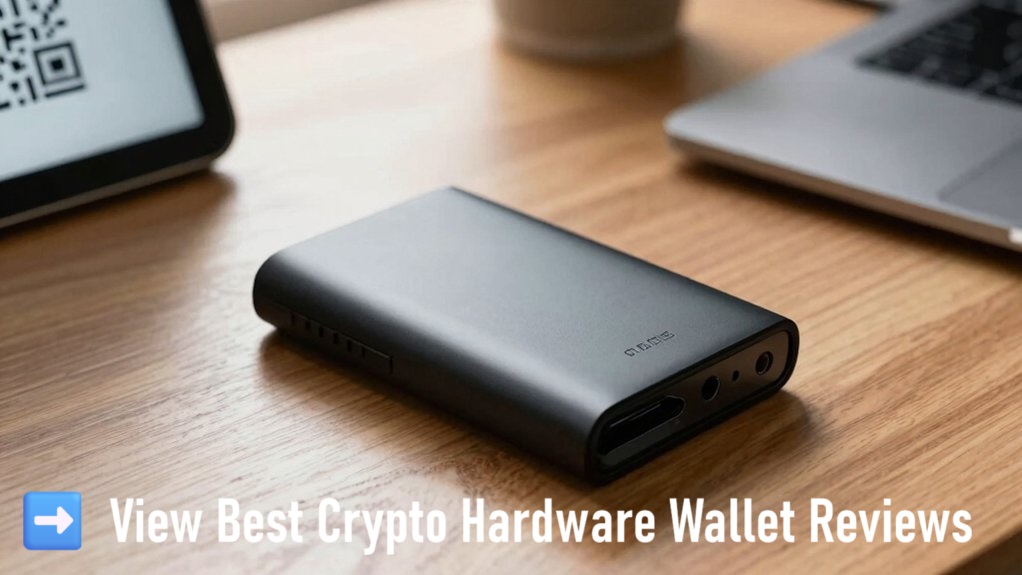
The crypto world got a wake-up call when researchers discovered a MITM vulnerability in Ledger’s hardware wallet app. Hackers could redirect funds by altering transaction addresses. Not so secure after all, huh? Hardware wallets, the supposed gold standard of crypto security, proved they weren’t immune to these attacks.
MITM attacks come in various flavors. IP spoofing, DNS manipulation, SSL certificate forgery—pick your poison. They all accomplish the same goal: compromising your transactions by changing where your crypto goes. One minute you’re sending Bitcoin to your friend, the next it’s heading straight to a hacker’s wallet in some digital underworld.
One click sends your Bitcoin to your friend. One MITM attack sends it to digital oblivion.
The problem is detection. Most users don’t manually verify transaction addresses. They click “send” and hope for the best. Bad move. Malware on compromised devices can change addresses right before your eyes, and you’d never know it. Once that transaction hits the blockchain, good luck getting your crypto back. Implementing two-factor authentication is essential in bolstering your defenses against such vulnerabilities.
Preventing these attacks isn’t rocket science, but it requires vigilance. Secure connections (HTTPS) are non-negotiable. Public Wi-Fi? Avoid it like a scam coin. Multi-factor authentication and VPNs add layers of protection that make attackers’ jobs harder. Emerging technologies like secret-less protocols offer promising solutions by eliminating the need to exchange sensitive authentication secrets. These prevention strategies are crucial as attackers increasingly target mobile devices for MITM attacks due to their widespread use in crypto transactions.
Blockchain technology itself is designed with security in mind, but the surrounding infrastructure remains vulnerable. It’s like having a state-of-the-art safe inside a cardboard house. The weakest link isn’t the blockchain—it’s how users interact with it.
Key management remains essential. Your crypto is only as secure as your private keys. If MITM attackers get those, game over. Your digital fortune disappears faster than free tokens at a crypto convention.
Frequently Asked Questions
How Do VPNS Protect Against Man-In-The-Middle Attacks?
VPNs create encrypted tunnels between devices and VPN servers. This encryption makes intercepting or altering data nearly impossible for attackers. They mask IP addresses too, reducing targeting potential.
Pretty effective on public WiFi, where MITM attacks thrive.
But they’re not perfect. VPNs only protect traffic to the gateway—not beyond.
And if your device is already compromised? Tough luck. They can’t fix DNS poisoning or software vulnerabilities either. Better than nothing, though.
What Tools Can Detect if You’re Experiencing a MITM Attack?
Several tools can detect MITM attacks in progress.
Network monitoring software spots unusual traffic patterns or suspicious IP changes.
Encryption validators like certificate verification tools alert users to invalid SSL/TLS certificates.
Packet analyzers examine data for tampering evidence.
SIEM solutions correlate security events in real-time.
Intrusion detection systems flag abnormal network behavior.
Even simple tools like browser warnings about certificate errors help.
Bottom line: detection requires vigilance across multiple fronts.
Nothing’s foolproof, though.
Can Hardware Keys Prevent Man-In-The-Middle Attacks Completely?
Hardware keys can greatly reduce MITM attack risks, but they’re not a silver bullet. They excel at secure authentication, making credential theft nearly impossible.
But they have limits. Physical vulnerability is real—lose it, you’re screwed.
And implementation matters. Without proper system integration, attackers might bypass the key entirely.
They work best as part of a broader security approach. Complete prevention? Nope. Massive improvement? Absolutely.
How Quickly Can Attackers Execute Sophisticated Man-In-The-Middle Attacks?
Sophisticated MITM attacks can happen shockingly fast. Some take just minutes when exploiting known vulnerabilities. ARP and DNS spoofing? Lightning quick.
But don’t be fooled—the most damaging attacks often involve extensive preparation. Cybercriminals collaborate, sharing techniques to enhance effectiveness. They’re constantly adapting, too.
The real danger isn’t just speed but precision. One moment you’re secure, the next—compromised. No dramatic countdown, no warning. Just silent infiltration while you’re none the wiser.
Are Certain Cryptocurrencies More Vulnerable to Man-In-The-Middle Attacks?
Some cryptocurrencies definitely have bigger targets on their backs.
Bitcoin gets hammered with MITM attacks due to its popularity.
Ethereum’s complex smart contracts? Extra attack surface.
DEXs are particularly vulnerable—decentralization isn’t always your friend.
Ledger’s 2018 wallet fiasco proved hardware isn’t immune either.
Public networks don’t discriminate, but cryptocurrencies without multi-factor authentication or proper HTTPS implementation?
They’re practically rolling out the welcome mat for attackers.
Zero-day exploits hit everyone, though.
Man-in-the-middle attacks represent one of the most sophisticated forms of digital asset attacks targeting cryptocurrency transactions and wallet communications.
Man-in-the-middle attacks pose significant risks to crypto monetary systems by intercepting and potentially altering transaction data between users and networks.
Man-in-the-middle attacks pose a significant risk to digital asset security by intercepting communications between users and cryptocurrency exchanges.
Man-in-the-middle attacks pose significant security risks to crypto monetary systems by intercepting communications between users and cryptocurrency exchanges.