PayPal’s Crypto Revolution: Solana and Chainlink Join Digital Asset Arsenal

While traditional finance giants once scoffed at cryptocurrency, PayPal has quietly engineered a complete about-face since 2020. The payments behemoth started small, securing a conditional Bitlicense from New York regulators and offering just four cryptocurrencies: Bitcoin, Ethereum, Litecoin, and Bitcoin Cash. Times change. Money evolves.
By 2022, PayPal had upgraded to a full Bitlicense, cementing its regulatory standing. Not exactly thrilling stuff, but essential groundwork for what came next. In 2024, they launched their own stablecoin, PayPal USD (PYUSD), initially on Ethereum, and extended crypto trading to business accounts. The suits were finally getting serious about digital assets.
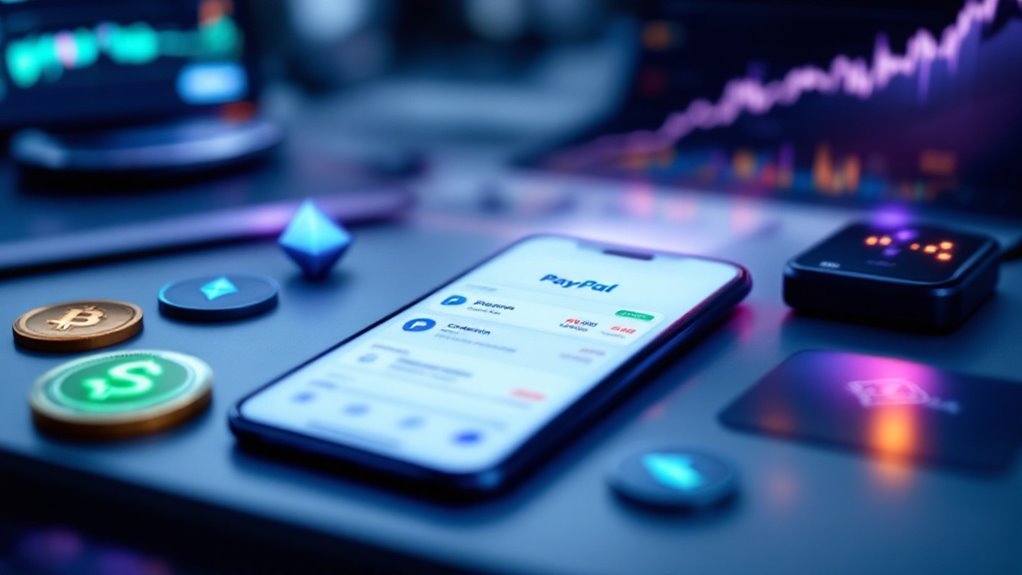
The latest expansion is genuinely interesting. PayPal just added Solana and Chainlink to its U.S. crypto lineup. They’ve also ditched MoonPay as an intermediary—a smart move that cuts fees and simplifies transactions. Users can now trade seven cryptocurrencies directly through the platform they already use for online payments. This abandonment of MoonPay represents a decisive shift in PayPal’s operational strategy toward greater control and efficiency.
Why these particular cryptos? Solana brings speed and dirt-cheap transaction fees to the table. Chainlink serves as an oracle network, connecting blockchains with real-world data. It’s not a random selection; it’s strategic positioning in the DeFi space.
PYUSD now works on both Ethereum and Solana networks, giving users options based on their preferences for speed versus security. The company recognized the value of blockchain for facilitating faster and more cost-effective transactions across their payment ecosystem. For merchants, this means easier conversion between crypto and traditional currency at checkout. No conversion fees when using PYUSD. Pretty slick.
The regulatory framework isn’t something to gloss over. PayPal’s full Bitlicense means strict compliance with anti-money laundering and KYC protocols. They implement identity verification processes to prevent fraud and financial crimes in their crypto operations. They’ll even cover unauthorized transfers up to $50,000—try getting that kind of protection from your average crypto exchange.
Business users can process crypto payments through Braintree and Hyperwallet APIs. For now, these services remain U.S.-focused, but global expansion seems inevitable. Finance isn’t just changing. It’s already changed.
PayPal’s latest expansion demonstrates how the company continues strengthening its paypal digital asset offerings by integrating major blockchain tokens like Solana and Chainlink.
PayPal’s integration of Solana and Chainlink represents a significant step toward mainstream adoption of digital monetary systems in everyday commerce.
The integration of the solana digital asset into PayPal’s platform represents a significant milestone for blockchain-based payment solutions.
PayPal’s integration of Solana and Chainlink represents a significant step toward mainstream adoption of crypto monetary systems for digital payments.