Gold Coins: Digital Assets Backed by Precious Metal
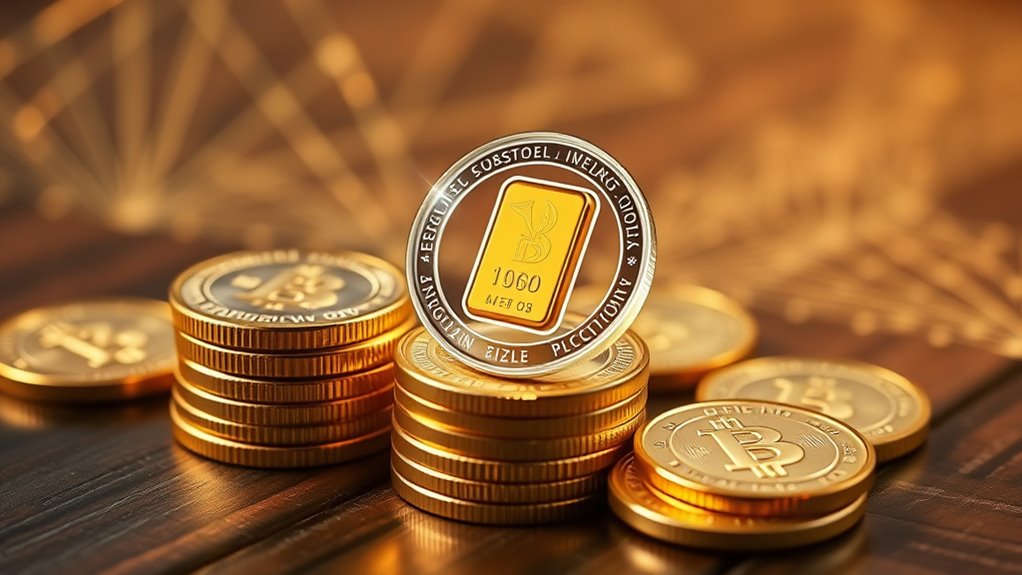
Gold-backed tokens are digital assets representing physical precious metals stored in vaults. Each token equals a specific amount of gold, verified through third-party audits. Unlike Bitcoin, these tokens offer intrinsic value while combining gold’s stability with blockchain efficiency. They’re increasingly popular in DeFi for lending and yield farming. Investors get fractional ownership without storing bulky metal. Platforms like Tether Gold and Paxos Gold offer 1:1 backing ratios with actual gold. The digital-physical connection creates unique investment possibilities.

While cryptocurrencies often make headlines for their wild price swings, a quieter revolution is taking place in the digital asset space. Gold-backed tokens—digital assets tethered to physical precious metals—are gaining traction among investors seeking stability in the volatile crypto world. These tokens represent actual gold or silver stored in secure vaults. No joke. Real metal backing every digital coin.
These assets offer something Bitcoin can’t: intrinsic value. When markets go haywire, gold has historically maintained worth. Now imagine combining that stability with blockchain technology. Pretty clever, right? Investors get exposure to precious metals without dealing with bulky storage or security concerns. And unlike buying a whole gold bar, these tokens allow fractional ownership—even a few dollars’ worth. Additionally, these cryptocurrencies provide an innovative way to invest in gold, appealing to those who want to diversify into digital assets while maintaining exposure to gold’s value.
Gold combines timeless value with modern blockchain—bringing stability to crypto without the hassle of physical storage.
The mechanics are straightforward. Each token equals a specific amount of metal. Regular third-party audits verify the reserves. Smart contracts handle transactions transparently. And yes, most tokens can be redeemed for physical metal. That direct redemption option keeps issuers honest.
During economic uncertainty, these gold-backed tokens shine. They serve as digital safe havens when both traditional markets and cryptocurrencies falter. In countries with unstable currencies, they provide a reliable alternative for transactions and savings. Some people actually use them for cross-border payments. Imagine that.
The regulatory landscape remains complex, though. These tokens typically fall under commodity regulations rather than currency rules. Issuers must comply with AML and KYC regulations while conducting proper reserve audits across different jurisdictions. Not exactly simple.
Beyond stability, these assets bring precious metals into the DeFi ecosystem. They’re being used for lending, borrowing, and yield farming. Some platforms like Tether Gold and Paxos Gold have gained popularity for their 1:1 backing ratio with physical gold stored in professional vaults. Traditional gold investors might scoff, but the liquidity advantages are significant. Trading digital gold is faster and cheaper than moving physical bars.
The concept isn’t perfect. Trust issues persist. Storage costs get passed to token holders. But for investors seeking middle ground between crypto volatility and traditional assets, gold-backed tokens offer an intriguing compromise. Old-world value meets new-world technology.
Frequently Asked Questions
How Can I Securely Store Gold-Backed Digital Tokens?
Investors need secure storage for gold-backed tokens. Cold wallets keep assets offline, away from hackers. Multi-signature setups add protection, requiring multiple approvals for transactions.
Hardware wallets like Ledger or Trezor work great. Two-factor authentication is a must. Digital wallets need regular updates—security isn’t optional.
Some prefer custody solutions from reputable providers. Bottom line: layers of security matter. Fancy blockchain technology means nothing if your wallet gets compromised.
What Happens if the Backing Company Goes Bankrupt?
If the backing company goes bankrupt, your tokens could be in serious trouble.
Bankruptcy courts might treat those assets as company property, not yours. Tough luck. The assets backing your tokens might get liquidated to pay off creditors.
You’ll probably end up as an unsecured creditor—back of the line, buddy. Recovery? Uncertain and potentially minimal.
And don’t expect quick resolution. Bankruptcy proceedings drag on forever, especially with complicated digital assets.
No regulatory clarity makes things even messier.
Can I Redeem My Digital Gold Coins for Physical Gold?
Yes, digital gold can typically be redeemed for physical gold. Major platforms like PhonePe, Paytm, and SafeGold offer this service.
The process varies but generally involves selecting how much to convert, choosing the form (coins, bars, jewelry), and paying applicable fees. These fees aren’t trivial – expect making charges, delivery costs, and taxes.
Each platform has different policies worth checking. Gold-backed cryptocurrencies like PAXG and XAUT also allow redemption for the real thing.
Are Gold-Backed Digital Assets Regulated by Financial Authorities?
Gold-backed digital assets exist in a regulatory gray zone. Different countries, different rules. In the U.S., both the SEC and CFTC might claim jurisdiction—one for securities, one for commodities. Talk about awkward!
Regulatory frameworks vary wildly across jurisdictions. Some countries embrace these assets; others view them suspiciously.
Efforts to harmonize global regulations are happening, but progress is slow. Meanwhile, issuers navigate AML and KYC requirements as best they can.
The regulatory landscape? Complicated, to say the least.
What Are the Tax Implications of Trading Gold-Backed Cryptocurrencies?
Trading gold-backed cryptocurrencies triggers capital gains tax. Period.
Unlike physical gold (taxed as collectibles at 28%), these digital assets follow crypto tax rules. Short-term gains? Regular income rates. Long-term? Lower rates apply.
Record-keeping is essential. The IRS doesn’t mess around here. Exchanges might provide 1099-Bs, but don’t count on it.
Mining these tokens? That’s ordinary income, folks.
The regulatory landscape keeps shifting, making tax planning a moving target.
Digital gold coins represent a modern evolution of traditional gold monetary systems by combining blockchain technology with physical precious metal backing.
As digital monetary systems continue to evolve, gold-backed cryptocurrencies offer investors a bridge between traditional precious metals and modern blockchain technology.