Understanding Crypto Breaches: How to Stay Protected
Crypto breaches have stolen billions—$1.7B in 2023 alone. Hackers target exchanges and DeFi platforms through flash loans, bridge exploits, and smart contract bugs. Protection isn’t rocket science: use hardware wallets, enable two-factor authentication, and keep assets in cold storage. North Korean hackers and phishing scams aren’t going away. The legitimacy of cryptocurrency takes a hit with each hack. The rest of this article exposes the dirty details of staying safe.

While cryptocurrencies promised a financial revolution, they’ve delivered something else entirely: a playground for hackers. The numbers don’t lie – over $1.7 billion stolen in 2023, $3.8 billion in 2022, and a staggering $2.2 billion already gone in 2024. Not exactly the secure future we were sold.
Centralized exchanges and DeFi platforms make perfect targets. Why? They’re swimming in assets and riddled with complex smart contracts. Flash loan attacks, cross-chain bridge exploits, phishing scams – hackers have quite the arsenal. Remember the Binance BNB Bridge hack? That little blunder cost $570 million. Just like that, gone.
The culprits behind these breaches are frustratingly predictable. Smart contract bugs. Compromised private keys. Security taking a backseat to rapid growth. And let’s not forget the social engineers – those digital con artists who make phishing look like an art form. Even nation-states are getting in on the action. North Korean hackers have their fingerprints all over numerous high-profile heists.
Security vulnerabilities in crypto aren’t mysterious—they’re mundane failures amplified by treasure chests waiting to be plundered.
These breaches do more than drain wallets. They shake market stability. They erode user trust. They attract regulatory hawks circling overhead. Each hack chips away at cryptocurrency’s legitimacy in the public eye.
The variety of attacks is almost impressive. Flash loan attacks manipulate asset prices using uncollateralized loans. Bridge exploits target the vulnerable connections between blockchains. Smart contract exploits find the needle-in-a-haystack bug that brings the whole system down. Some attacks are sophisticated; others just steal your private keys. Old school, but effective.
The wake of destruction includes some notorious cases: Wormhole’s $325 million loss, DMM Bitcoin’s $305 million disaster, Euler Finance’s $197 million flash loan catastrophe, and Nomad Bridge’s $190 million heist. The exploitation of these vulnerabilities undermines the stability needed for the over 2,000 U.S. businesses that now accept bitcoin as payment, while crypto malware continues to pose a significant threat to the security of digital assets.
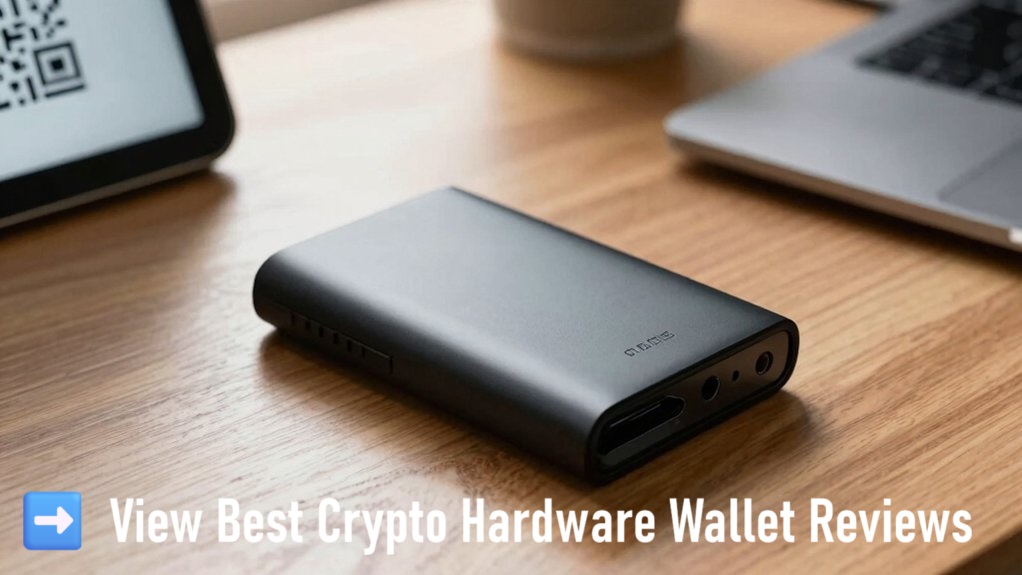
Hardware wallets and cold storage offer some protection, keeping assets offline where hackers can’t easily reach them. Strong authentication helps too. The implementation of Two-Factor Authentication provides an essential extra security layer that significantly reduces unauthorized access risks. But in this Wild West of digital finance, there are no guarantees. Just targets and those who haven’t been targeted yet.
Frequently Asked Questions
How Do Hardware Wallets Protect Against Crypto Breaches?
Hardware wallets are crypto’s security fortress. They keep private keys completely offline, away from hackers’ greedy fingers.
Unlike exchanges (which get hacked… a lot), these devices store everything locally. No internet access, no problem. They require physical confirmation for transactions—good luck phishing that.
Their tamper-resistant design means even physical theft isn’t straightforward. Updates patch vulnerabilities regularly.
Bottom line: hardware wallets create a serious barrier between your crypto and potential thieves.
Can Insurance Cover Losses From Crypto Exchange Hacks?
Yes, insurance can cover losses from crypto exchange hacks. Specialized crypto insurance policies exist specifically for this purpose.
They typically cover theft, cybersecurity breaches, and unauthorized access to exchange systems. But they’re not perfect. Coverage limits often apply, and premiums are steep—really steep.
Not every exchange has insurance, either. And forget about market volatility losses; those aren’t covered. The fine print matters. Insurance exists, but it’s still catching up to the crypto world.
What Recovery Options Exist After a Crypto Breach?
After a crypto breach, victims have several recovery paths. Swift action is critical.
They can trace stolen assets using blockchain analysis tools like Chainalysis. Contacting exchanges might freeze funds if they haven’t been converted.
Documentation matters—a lot. Legal options exist, though cross-border cases get messy.
Insurance? Sometimes available, but coverage varies wildly. Professional blockchain forensic experts can help with complex thefts.
The hard truth: full recovery remains unlikely for most victims.
Are Certain Cryptocurrencies More Secure Against Breaches Than Others?
Some cryptocurrencies definitely have better security track records.
Bitcoin’s simplicity makes it less vulnerable to certain attacks, while Ethereum faces more risks due to complex smart contracts. No surprise there.
Monero and Zcash offer enhanced privacy features that reduce certain breach vectors.
The security architecture matters—proof-of-work systems like Bitcoin’s are harder to compromise than some alternatives.
But let’s be real: user behavior still trumps everything. The most “secure” crypto can’t protect against terrible passwords.
How Quickly Do Hackers Typically Liquidate Stolen Cryptocurrency?
Hackers move fast. Really fast.
After breaches, they typically liquidate stolen crypto immediately to avoid detection. North Korean groups are notorious for this—running funds through thousands of blockchain transactions within days or hours.
First stop? Usually decentralized exchanges. No ID needed.
Convert to Ether or Bitcoin, split into smaller amounts, hop across blockchains using bridges. Mixers like Tornado Cash help blur the trail.
The whole process? Sophisticated. Calculating.
And getting harder to track every year.
As cryptocurrency adoption grows worldwide, implementing robust digital asset protection strategies becomes essential for safeguarding your investments from potential security threats.
As crypto monetary systems continue to evolve, understanding potential security vulnerabilities becomes essential for protecting your digital assets from emerging threats.
Implementing robust security measures is essential for effective monetary systems protection in today’s increasingly vulnerable digital financial landscape.