Gold Futures: How to Trade the Precious Metal Market?
Gold futures offer traders leverage to control large positions with minimal capital. Trading occurs primarily on the CME and ICE, with contracts typically expiring in even-numbered months. Unlike physical gold, futures require no storage costs or security concerns. Market participants include bullion dealers, jewelers, mining companies, and institutional investors. Prices fluctuate based on geopolitical events, economic data, dollar strength, and central bank actions. The substantial leverage creates both opportunity and significant risk for those entering this volatile market.
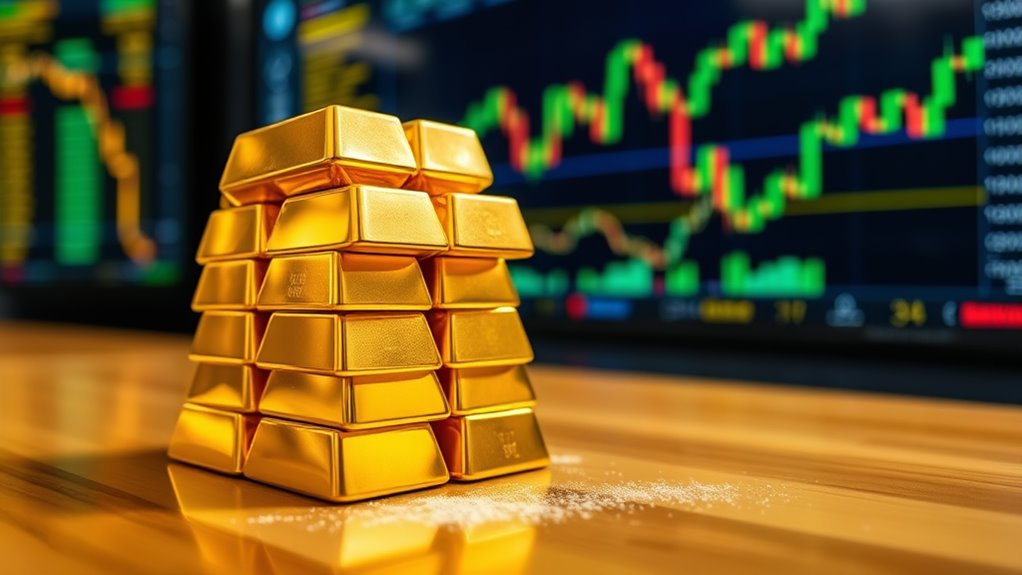
Every year, billions of dollars flow through gold futures markets. These specialized contracts allow traders to buy or sell gold at predetermined prices by specific future dates. Simple as that. The Chicago Mercantile Exchange and Intercontinental Exchange host most of this trading, creating standardized platforms where everyone plays by the same rules.
Gold futures aren’t for the faint-hearted. The leverage is massive. Control huge positions with relatively small capital. Great when prices move your way. Devastating when they don’t. Traders often secure contracts worth $120,000 with just a small margin deposit. Contracts typically expire in even-numbered months – February, April, June, August, October, and December. Mark your calendars. Understanding leverage is essential for managing risks effectively.
Who’s playing this game? Everyone from bullion dealers and jewelers to mining companies and institutional investors. They’re all there, for different reasons. Some hedge, some speculate. The mining companies don’t want to get caught with their pants down when prices tank. Smart.
Trading gold futures offers benefits that physical gold just can’t match. No storage costs. No insurance headaches. No worrying about your neighbor stealing your shiny bars. Plus, the liquidity is tremendous. Buy or sell whenever markets are open – which is basically 23 hours a day, Sunday through Friday.
Strategies abound. Trend following, mean reversion, spread trading. Take your pick. Some traders watch breakouts like hawks. Others play momentum. The market doesn’t care which you choose. It’ll take your money just the same if you’re wrong.
What moves gold prices? Everything, seemingly. Geopolitical flare-ups send prices soaring. Economic data causes wild swings. The dollar strengthens, gold weakens – usually. Central banks buy or sell. Supply chains tighten. It’s a complex dance with countless partners.
Standard contracts represent 100 troy ounces. Meet your margin requirements or get kicked out of positions. Fast. The market waits for no one. Prices react instantly to news. Blink and you’ve missed the move. That’s the nature of futures trading. Brutal efficiency, zero sympathy.
When trading gold futures, it’s crucial to use a reliable platform that offers real-time market data to make informed decisions during high volatility periods.
Frequently Asked Questions
What Is the Minimum Capital Needed to Start Trading Gold Futures?
Trading gold futures isn’t cheap.
Institutional players like FCMs need a cool $1 million in adjusted net capital to stay compliant. Introducing Brokers can get by with $45,000.
But for individual traders? The real barrier is meeting margin requirements, which vary based on market conditions.
Standard contracts (100 ounces) demand more capital than Micro contracts (10 ounces).
Bottom line: you need enough to cover initial margins plus a buffer for market fluctuations. Not pocket change.
How Do Seasonal Patterns Affect Gold Futures Pricing?
Seasonal patterns hit gold futures hard.
Prices typically climb from July to February, no joke. Why? Festivals and weddings in India drive jewelry demand – that’s 50% of gold production right there.
Christmas shopping adds fuel. Traders watch these patterns like hawks. Cultural events in China matter too.
The market’s predictable, yet not. Economic indicators and geopolitical chaos can throw seasonal trends out the window.
Momentum traders love this stuff.
Can I Take Physical Delivery of Gold Through Futures Contracts?
Yes, investors can take physical delivery of gold through futures contracts. Most traders don’t bother with this option—they close positions before expiration.
But for those who want actual gold bars? It’s possible. The process involves proper notice, approved depositories, and meeting strict requirements. Gold must be certified by recognized refiners.
Costs add up fast—storage fees, transportation, insurance. Not for casual traders. Only makes sense for businesses or serious gold bugs with deep pockets.
Are Gold Futures Trading Hours Different From Regular Market Hours?
Gold futures absolutely operate on a different schedule than standard markets.
They trade nearly 24 hours, running from 6 p.m. to 5 p.m. EST Sunday through Friday. Regular COMEX hours are just 9:30 a.m. to 5 p.m. EST weekdays (closing at 1 p.m. Fridays).
This extended availability lets traders react to global events whenever they happen. Night owls rejoice!
The precious metal never sleeps – well, except for that one-hour break each afternoon.
How Do Geopolitical Tensions Specifically Impact Gold Futures Prices?
Geopolitical tensions send gold futures soaring. Plain and simple.
When countries clash, investors panic. They rush to safe havens – hello, gold.
Supply chain disruptions? Check. Market volatility? Double check.
History doesn’t lie. During conflicts, gold performs.
Central banks stockpile it while currencies fluctuate wildly.
Trade wars, territorial disputes, political unrest – all bullish signals for gold futures.
Funny how humanity’s oldest problems still drive our supposedly sophisticated financial markets. Some things never change.
Many traders are now exploring gold digital asset options as an alternative way to gain exposure to precious metal price movements.
Understanding the historical role of gold monetary systems provides valuable insight into why gold remains a cornerstone asset in modern futures trading.
Modern traders can also explore gold digital asset options alongside traditional futures contracts to diversify their precious metals portfolio.
Understanding the historical role of gold monetary systems helps traders better grasp why gold remains a valuable hedge against currency fluctuations.