Is Digital Coin a Good Investment in 2025?
Digital coins remain a mixed bag for 2025. Bitcoin could soar between $85,500 and $165,000, while Ethereum forecasts range wildly from $191 to $6,000. Institutional money is pouring in, with Bitcoin ETFs potentially exceeding $50 billion. But beware—volatility isn’t going anywhere. Expect regular price crashes and regulatory curveballs. Security threats persist despite better protocols. The crypto market offers promising prospects… and considerable ways to lose your shirt.

As the crypto landscape continues to evolve, investors are eyeing 2025 with a mix of excitement and trepidation. The numbers look impressive—Bitcoin projected to trade between $85,500 and $165,000, with stretched targets reaching an eye-watering $185,000. Not too shabby for digital magic internet money.
Ethereum isn’t exactly slouching either. Forecasts put it at $191.06, while VanEck’s more bullish outlook suggests it could exceed $6,000 by year-end. Talk about a wide range. Litecoin might hit $250 if everything goes perfectly. Big if.
Institutional players are finally showing up to the party. Bitcoin ETFs are driving serious money into the space, and tokenization could surpass $50 billion in value. Avalanche’s price prediction range of $26.12 to $95.11 shows its potential to benefit from the institutional adoption trend.
Banks—yes, those same institutions that called crypto a scam—are now experimenting with tokenized deposits. Bitcoin’s historic performance as the best-performing asset class in eight of the last eleven years has forced traditional finance to reconsider their stance. Funny how money changes minds.
The DeFi sector could see its Total Value Locked exceed $200 billion. AI-related tokens and consumer applications are leading this charge. Meanwhile, stablecoins are projected to settle $300 billion daily, up from $100 billion in late 2024. That’s real utility, not just speculation.
But it’s not all moonshots and lambos. Volatility remains crypto’s middle name. Bitcoin retracements to support levels are practically guaranteed. Futures trading has emerged as a popular strategy for traders seeking to hedge positions without owning the underlying cryptocurrencies.
Regulatory changes loom large—especially in the U.S. And altcoins? They’re facing heavy bifurcation early in 2025. Translation: many will crash and burn.
Security concerns persist despite improved protocols. Self-custody solutions and KYC/AML practices are helping, but hacks still happen. Just ask anyone who’s been “rugged.”
For the adventurous, AI agents and NFTs offer speculative opportunities. The NFT market might reach $30 billion in trading volumes.
Meme coins like Floki and Dogwifhat continue to rely on community hype and social media frenzy.
Bottom line: crypto in 2025 looks promising but perilous. The serious money is betting on infrastructure and real utility. The rest? Still a casino. Choose your chips wisely.
Frequently Asked Questions
How Does Digital Coin Taxation Differ Across Major Countries?
Digital coin taxation varies drastically worldwide.
Japan imposes progressive rates (15-55%), while Denmark hits investors with 37-52%.
Germany? Smart system—45% if sold within a year, completely tax-free after that.
Some countries don’t tax crypto at all: El Salvador, Malaysia, Switzerland. Makes sense why they’re crypto havens.
Others hate the whole concept—China, Egypt, and Afghanistan have outright bans.
The tax difference between countries? Massive. Location matters. A lot.
What Cybersecurity Measures Protect Digital Coin Investments?
Crypto investors rely on multiple defense layers.
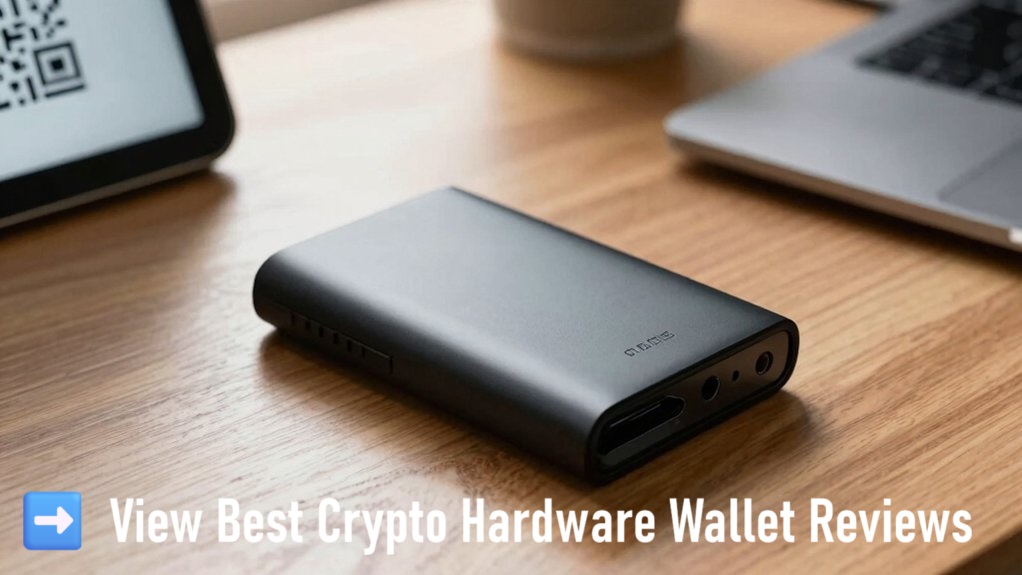
Hardware wallets keep private keys offline—physically separated from hackers. Two-factor authentication adds another barrier. Cold storage beats convenience for serious hodlers. Public WiFi? Terrible idea for transactions.
Verification protocols prevent sending coins into the void. And yeah, firmware updates matter. The crypto space attracts sophisticated criminals, not amateurs.
Security isn’t optional—it’s what stands between ownership and devastating loss. No safeguards, no coins.
Are Stablecoins Safer Than Other Cryptocurrencies During Market Volatility?
Stablecoins offer considerably more safety during market volatility than other cryptocurrencies.
Designed to maintain parity with fiat currencies, they avoid the wild price swings typical of Bitcoin and altcoins. Their fiat-backed reserves (actual cash and bonds) provide a safety net traditional cryptos lack.
Plus, increased regulatory scrutiny means more transparency. When crypto markets tank, stablecoins generally hold their value.
No guarantees, of course—remember TerraUSD’s epic collapse? But generally, they’re the bomb shelters of crypto winter.
How Do Environmental Concerns Impact Different Digital Coins?
Environmental concerns hit digital coins differently.
Bitcoin’s the worst offender—consuming energy like a small country and spewing CO₂ by the truckload.
Ethereum? Cleaned up its act by switching to proof-of-stake, slashing energy use by about 100%. Quite the transformation.
Stablecoins face indirect impacts through their underlying infrastructure.
Newer coins often build on greener protocols from the start.
The industry’s responding with renewable energy pledges and efficiency improvements.
Some miners still don’t care. Nature does, though.
Can Digital Coins Be Included in Retirement Portfolios?
Digital coins can be included in retirement portfolios. Fact is, crypto IRAs and some 401(k) plans now offer these options.
The upside? Potential high returns and diversification benefits. The downside? Gut-wrenching volatility and regulatory uncertainty. Most financial types suggest limiting crypto to 5% of retirement assets—because nobody wants to eat cat food in their golden years.
Bitcoin ETFs have made access easier, but security concerns remain. Not your typical retirement asset, that’s for sure.
As cryptocurrency markets continue to evolve, many investors are reconsidering their digital asset investment strategies for the upcoming year.
As digital monetary systems continue to evolve rapidly, investors are increasingly considering digital coins as potential portfolio additions for 2025.
Many investors are considering digital asset investment strategies as cryptocurrencies continue to evolve and mature in the financial markets.
As digital monetary systems continue to evolve rapidly, many investors are questioning whether digital coins represent a viable long-term investment opportunity.