Securing Your Crypto: The Importance of Private Keys
Private keys are fundamentally the passwords to your crypto kingdom. Lose them, kiss your funds goodbye. Forever. They’re mathematically linked to public keys but must remain secret at all costs. Different wallet types offer varying security levels—hot wallets for convenience, cold storage for serious protection. Threats lurk everywhere: phishing, malware, even that “trustworthy” friend. Advanced measures like multi-signature technology and proper backups aren’t optional luxuries. The security landscape keeps evolving for good reason.
As cryptocurrencies surge in popularity, the responsibility of protecting digital assets falls squarely on the owner’s shoulders. No bank will reimburse you for stolen Bitcoin. No customer service rep to call when you forget your key. That’s crypto for you—complete control means complete accountability.
Private keys are fundamentally the passwords to your digital fortune. They’re mathematically linked to your public key, creating that unique fingerprint that identifies your wallet on the blockchain. Lose this key, and you might as well throw your money into a digital abyss. It’s gone. Forever.
Wallet options abound, each with their own security implications. Hot wallets stay connected to the internet—convenient but risky. Cold storage keeps keys offline, away from greedy hackers. Hardware wallets—those little USB-looking devices—offer a solid middle ground. Paper wallets? Old school but effective, assuming your house doesn’t burn down.
Threats lurk everywhere. Phishing emails promising riches. Keyloggers silently recording every keystroke. Malware designed specifically to drain crypto wallets. Even that seemingly friendly crypto enthusiast might be trying to peek at your seed phrase. Trust nobody.
Multi-signature technology has changed the game. Now transactions require multiple keys—like a nuclear launch requiring two officers to turn their keys simultaneously. Overkill for your $50 of Dogecoin? Probably. Crucial for institutional holdings? Absolutely.
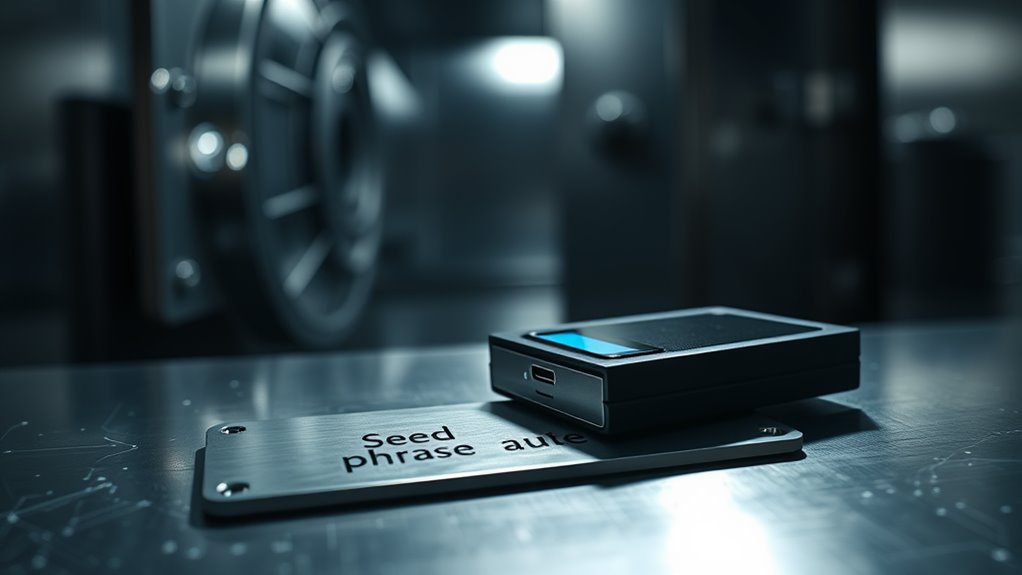
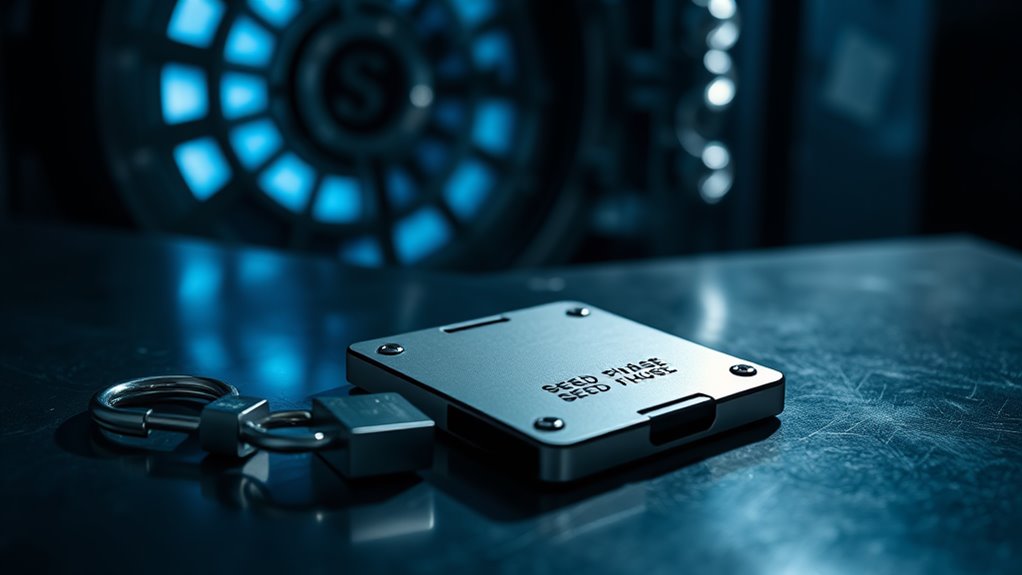
Smart crypto owners obsess over backup strategies. Seed phrases engraved in metal. Multiple copies stored in different physical locations. Regular testing of the recovery process. Death planning for your digital assets—morbid but necessary. Implementing strong password management alongside multi-factor authentication significantly reduces unauthorized access risks.
The security landscape keeps evolving. Biometrics, quantum-resistant algorithms, zero-knowledge proofs—all promising better protection against increasingly sophisticated threats. End-to-End Encryption provides an essential layer of protection during sensitive data transmission between wallet applications and blockchain networks. Hardware wallets offer superior protection by using crypto bridges to sign transactions without exposing your private keys. Meanwhile, the fundamentals remain unchanged: keep your private keys private, back up everything, and never, ever share your seed phrase.
While security tech races forward, the crypto mantra stays simple: guard keys, backup obsessively, trust no one.
In crypto, paranoia isn’t a disorder—it’s a survival strategy.
Frequently Asked Questions
How Do I Recover a Lost Private Key?
Recovering a lost private key isn’t easy. Period.
Users should first check wallet software for built-in recovery tools or auto-backup files. No luck there? Data recovery software might extract deleted wallet files.
Seed phrases work if you’ve got ’em. Professional recovery services exist, but they’re pricey. Some folks try brute force methods for partially remembered keys.
Reality check: without backups, chances are slim. Really slim.
Can Private Keys Be Brute-Forced or Hacked?
Technically, private keys can be brute-forced. But good luck with that.
The 256-bit keys used in crypto have 2^256 possible combinations—that’s a number so massive it would take approximately 10^77 years to crack using current technology. Not exactly weekend project material.
Vulnerabilities exist, though. Weak random number generators, software bugs, and implementation errors have led to compromised keys.
Quantum computers might eventually pose a threat. But direct brute-forcing? Practically impossible.
What’s the Difference Between Hot and Cold Storage?
Hot storage stays connected to the internet. Convenient but risky.
Think mobile apps, exchange accounts—quick access means vulnerability to hackers.
Cold storage exists offline. Hardware wallets, paper backups.
Disconnected from online threats. Much harder to steal from.
The tradeoff is simple. Hot wallets offer speed and ease.
Cold storage provides security. Smart crypto users typically use both.
One for transactions, one for savings.
Are Hardware Wallets Completely Immune to Security Breaches?
Hardware wallets aren’t invincible. Nothing is. They face real threats—supply chain attacks, firmware exploits, physical tampering, and the good old “$5 wrench attack” (physical coercion).
Perfect security? Dream on. But they’re dramatically safer than hot wallets.
The biggest vulnerability? Usually sitting between the chair and keyboard. Users get phished, fall for scams, or simply mishandle their recovery phrases.
Technology can only protect you so much.
Should I Split My Crypto Across Multiple Wallets?
Splitting crypto across multiple wallets isn’t just smart—it’s practically common sense these days.
Less exposure if one wallet gets compromised. Different purposes, different wallets. Trading funds separate from long-term holds. Hardware wallets for the big money, hot wallets for everyday transactions.
Not perfect though. More wallets mean more seed phrases to protect. More complexity. More things to potentially screw up.
Understanding private key security is fundamental to participating safely in crypto monetary systems where you alone control your digital assets.
Understanding private key security is fundamental to participating safely in crypto monetary systems where you control your own digital assets.