What Is Layer 4 in Blockchain Architecture?
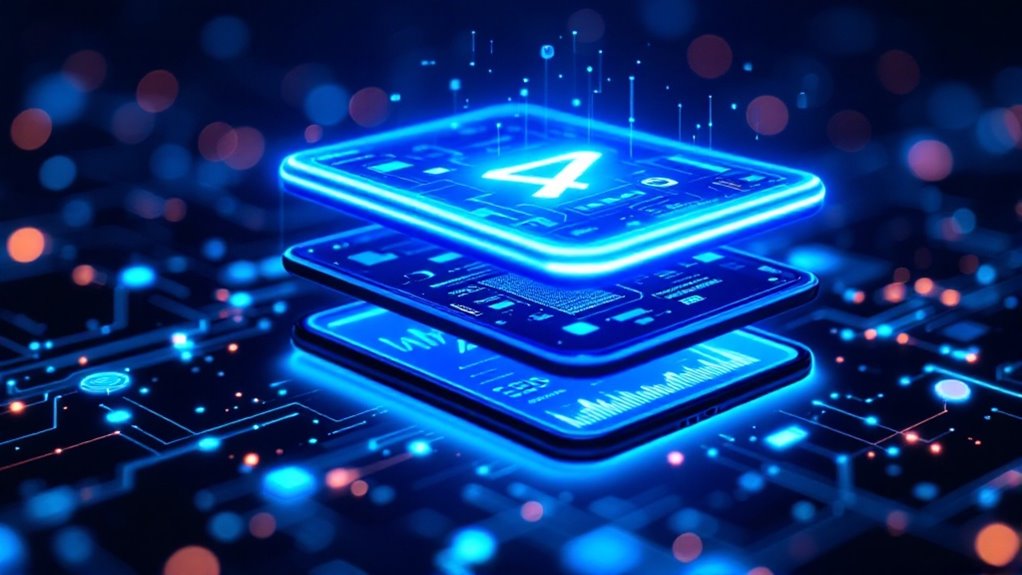
Layer 4 is blockchain‘s accessibility layer. It translates complex crypto jargon into something normal humans can actually use. Think wallets like MetaMask, dashboards, and interfaces that don’t require a computer science degree to navigate. It’s the bridge between blockchain’s technical mumbo-jumbo and everyday users just trying to manage their digital assets. Without Layer 4, blockchain would remain an exclusive tech club rather than the revolutionary system it promises to be. Curious about the other layers?

The gateway to crypto’s promised land sits right at the top. Layer 4 is where regular folks finally get to touch blockchain without needing a computer science degree. It’s the accessibility layer—the wallets, dashboards, and interfaces that let people actually use the technology instead of just talking about it.
Think MetaMask, Coinbase Wallet, or Etherscan. These aren’t just nice add-ons; they’re essential bridges between complex blockchain protocols and everyday users. Without them? Blockchain stays a nerdy thought experiment instead of a usable tool. Period.
Layer 4 components focus on making the impenetrable world of distributed ledgers somewhat comprehensible. Wallets secure your assets. Block explorers let you track transactions. API services give developers the tools to build without starting from scratch. It’s all about simplification.
Layer 4 translates crypto chaos into something regular humans can actually use—turning blockchain babble into everyday tools.
The impact is obvious. These interfaces democratize access to crypto. They’re why your cousin suddenly thinks he’s a DeFi expert after watching two YouTube videos. But that’s the point. Layer 4 reduces barriers, accelerates adoption, and drives innovation by making participation possible for non-techies.
Security remains paramount. These tools prioritize encryption and user protection—they have to. One security breach and users lose everything. No pressure.
The future looks interesting. AI integration. Advanced user experiences. Cross-chain capabilities. Regulatory compliance features. All coming to a blockchain interface near you. Soon enough.
Challenges exist, naturally. Creating intuitive interfaces for inherently complex systems isn’t easy. Neither is supporting multiple blockchains simultaneously. Or explaining what “gas fees” are to newcomers without making them run screaming. Many Layer 4 solutions must integrate with peer-to-peer protocols to ensure seamless communication between users and the underlying blockchain infrastructure. This layer includes smart contracts that facilitate application interactions on blockchain networks, enabling automation and programmability.
Innovative wallets like Argent exemplify the evolution of Layer 4 tools by offering social recovery options that eliminate the need for traditional seed phrases while maintaining non-custodial control.
The facts remain clear: Layer 4 isn’t just nice-to-have fluff. It’s the critical final piece that transforms blockchain from technical curiosity to practical technology. Without these user-facing tools, blockchain stays locked in academic papers and developer forums. With them? Regular people get access to the financial revolution. Maybe.
Frequently Asked Questions
How Does Layer 4 Interact With Traditional Financial Systems?
Layer 4 serves as the interface between blockchain and traditional finance.
Tools like MetaMask and Coinbase Wallet provide user-friendly access points. API services bridge the gap, feeding blockchain data into conventional systems. KYC/AML modules guarantee compliance with financial regulations. Fiat on-ramps allow direct conversion between cryptocurrencies and traditional currencies. Cross-chain wallets support interoperability.
It’s basically the translator that makes these two worlds understand each other. Not always perfect, but getting better.
What Security Vulnerabilities Are Specific to Layer 4 Applications?
Layer 4 applications face unique security challenges.
Smart contract vulnerabilities can lead to exploits like the DAO hack. User interfaces often suffer from phishing attacks and fake wallet interfaces. API endpoints may leak sensitive data through weak encryption.
Cross-chain bridges are particularly vulnerable—over $2 billion stolen in bridge hacks since 2021. Poor key management remains common.
These applications sit at the intersection of blockchain and traditional systems, creating security blind spots attackers love to exploit.
Can Layer 4 Solutions Operate Independently From Underlying Blockchain Layers?
No, Layer 4 solutions cannot operate independently from underlying blockchain layers.
They’re parasitic by design. These user interfaces and API services completely rely on Layer 1-3 infrastructure for security, transaction validation, and data storage.
Without these lower layers, your fancy MetaMask wallet becomes useless junk.
Layer 4 tools can switch between different chains or L2 solutions, sure, but they’re still tethered to the blockchain ecosystem.
No blockchain, no Layer 4. Simple as that.
How Does Governance Work for Layer 4 Protocols?
Governance for layer 4 protocols typically runs through DAOs and token-based voting systems. Users with governance tokens get to vote on updates, features, and changes.
Pretty democratic, right? Community forums on Discord and GitHub facilitate feedback loops. Multi-sig wallets add security to treasury decisions. Open-source code means anyone can audit or contribute. Many protocols use public testing phases before deployment.
Some governance is just for show, though—core teams still hold significant power.
What Programming Languages Are Most Suitable for Layer 4 Development?
Layer 4 development typically relies on JavaScript and Python as primary languages.
JavaScript dominates frontend work—building user interfaces and dApps with React—while Python handles backend services and data analysis.
Both languages support critical API integrations needed for interoperability between blockchain networks. No surprise there.
Some developers also use Solidity for smart contract components that interact with layer 4 solutions.
The language choice ultimately depends on specific protocol functions and integration requirements.
The digital asset layer in blockchain architecture represents where tokens, cryptocurrencies, and other valuable digital resources are managed and transacted.
Layer 4 protocols enable sophisticated applications and smart contracts that power modern blockchain monetary systems across various networks.
Layer 4 solutions enable sophisticated applications and smart contracts to operate efficiently on any digital asset blockchain infrastructure.
Layer 4 protocols enable the development of sophisticated blockchain monetary systems that can handle complex financial transactions and digital asset management.