Benefits of Paper Wallets for Crypto Storage
Paper wallets offer unbeatable security advantages for crypto storage. They’re completely offline, making them immune to hacking, malware, and exchange breaches. Cost? Practically free—just print it out. No technical expertise needed, no updates required, and they’ll outlast any hardware wallet when stored properly. Users maintain total self-custody without middlemen or data collection. For long-term hodlers on a budget, paper wallets deliver serious protection with minimal effort. The devil, of course, is in the physical storage details.
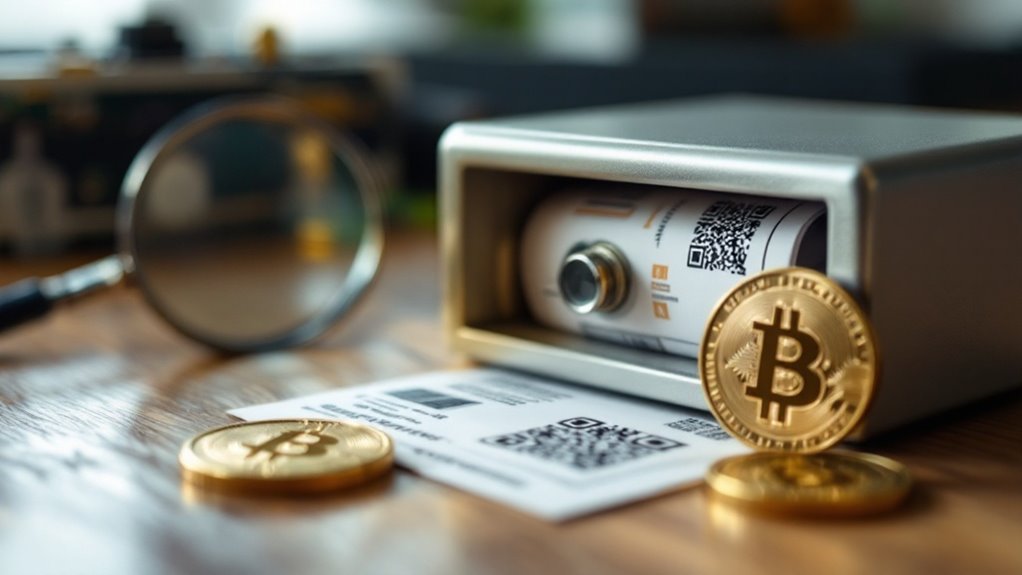
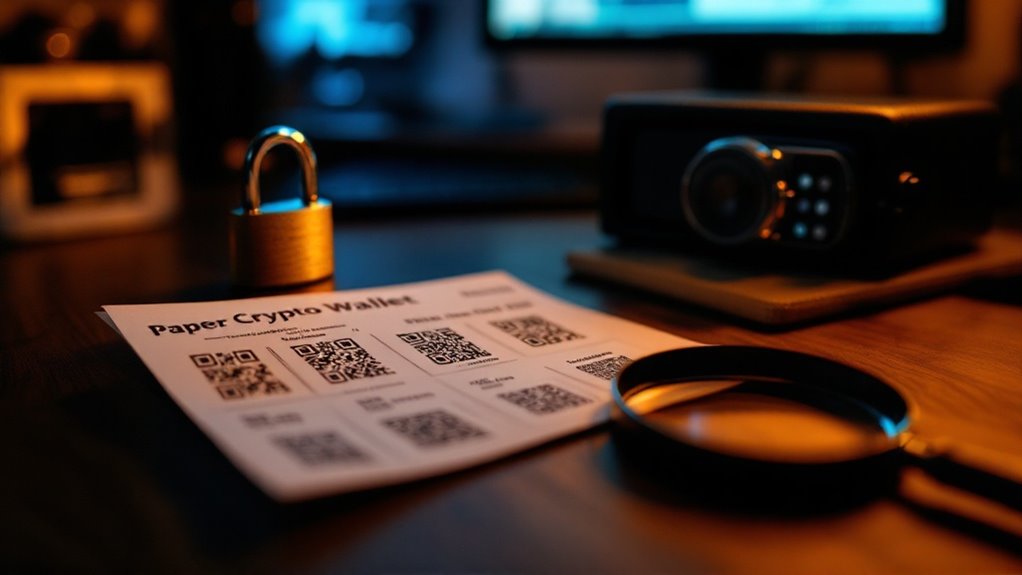
In a world obsessed with digital innovation, sometimes the oldest solutions work best. Paper wallets stand as a proof of simplicity in cryptocurrency storage—literally offline pieces of paper containing public and private keys. No internet connection means no opportunity for hackers to steal your crypto. Pretty genius, actually. Cold storage keeps digital assets completely disconnected from online threats, making paper wallets immune to exchange breaches, phishing attempts, and malware that plague digital alternatives.
Sometimes the most powerful security isn’t digital at all—it’s a piece of paper beyond the internet’s reach.
The cost factor is huge. Hardware wallets cost anywhere from $50 to $200. Paper wallets? The price of printing a page. Free creation using basic tools most people already own makes these an ideal entry point for crypto beginners or anyone on a tight budget. No maintenance fees, no subscription costs, no unexpected expenses. Just paper.
For long-term hodlers, paper wallets shine brightest. They don’t need software updates or battery replacements. They just sit there, doing their job year after year. Store them properly—laminated in a fireproof safe—and they’ll outlast whatever fancy new hardware wallet hits the market next month. Perfect for inheritance planning too, since relatives can physically access them.
The simplicity factor cannot be overstated. No technical expertise required. Print, secure, done. Even your technology-averse grandmother could manage it. Basic printing of QR codes or text-based keys is all that’s needed. No complicated setup processes or instruction manuals to decipher. Users just need to understand the core concept of sharing public keys while keeping private keys confidential.
Control freaks will love paper wallets. No middlemen. No third parties. No personal data collection. Just you and your crypto, exactly as Satoshi intended. Complete self-custody without answering to anyone else. While less convenient for frequent transactions, they offer robust encryption capabilities similar to other cold storage methods.
Sure, they require careful physical storage—multiple copies in secure locations is smart—but the benefits outweigh the hassle for many users. While hardware wallets offer more convenience for frequent traders, paper wallets remain relevant for basic cold storage. They allow for safely sweeping funds when needed while maintaining complete isolation from online vulnerabilities.
Sometimes analog beats digital. Sometimes paper beats silicon.
Frequently Asked Questions
How Do I Generate a Paper Wallet Securely?
Secure paper wallet generation isn’t rocket science. Just disconnect completely from the internet first.
Use offline tools like BitAddress—no network, no problem. Throw in some manual entropy (dice rolls work).
Print with a non-networked printer on tamper-resistant paper. Clear QR codes matter. Destroy digital traces afterward.
Some folks add BIP-38 encryption for password protection. Multiple copies in separate locations? Smart.
Bank vaults beat kitchen drawers. Period.
Can Paper Wallets Be Damaged by Water or Fire?
Paper wallets are extremely vulnerable to both water and fire.
Water exposure quickly renders them unreadable as ink runs and paper deteriorates.
Fire? Complete destruction in seconds. Not even a question.
Even humidity and normal environmental factors cause degradation over time, with ink fading and paper weakening.
That’s the harsh reality.
Many crypto holders learn this the hard way – when their funds become permanently inaccessible after environmental damage.
No second chances there.
What Happens if I Lose My Paper Wallet?
Losing a paper wallet is catastrophic. No way around it. Once it’s gone, your crypto is fundamentally gone too. Permanently.
There’s no customer service to call, no recovery options. It’s like dropping cash down a sewer drain—except potentially worth way more.
The keys printed on that paper are your only access. No physical wallet, no digital access. Period.
Unlike regular wallets, the decentralized nature of cryptocurrency means nobody can help restore what’s lost.
Are Paper Wallets Compatible With All Cryptocurrencies?
No way. Paper wallets aren’t universal crypto holders.
They work primarily with Bitcoin and a handful of others like Ethereum and Solana. Many cryptocurrencies? Totally incompatible.
Paper wallets can’t handle smart contracts or NFTs. They’re dinosaurs in the crypto evolution.
And forget about staying current—they can’t update to support new blockchain networks.
Serious limitations here. For anyone juggling multiple digital assets, paper wallets are basically the flip phone of crypto storage.
How Do I Transfer Funds From a Paper Wallet?
Transferring crypto from a paper wallet is pretty straightforward.
Scan the private key QR code with compatible wallet apps like Bitcoin.com or Mycelium. Don’t scan the public key—rookie mistake. Always sweep the entire balance at once.
For those without scanning capabilities, manual entry works too. Risky, though. Some exchanges require intermediate steps through another wallet first.
Always verify your transaction afterward. Cold, hard fact: once it’s transferred, that paper wallet is compromised. No going back.
Paper wallets provide an offline storage solution that helps protect your digital assets from the vulnerabilities inherent in crypto monetary systems.
As crypto monetary systems continue to evolve, many investors are seeking secure offline storage solutions like paper wallets.