What Is Ripple and How Does It Work in Crypto?
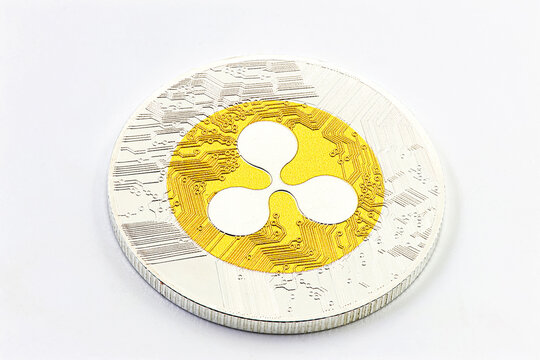
Ripple isn’t your average crypto player. It’s a blockchain-based payment system transforming cross-border transactions through RippleNet and the XRP Ledger. Transactions validate in seconds, not days like traditional banking. XRP, its native token, works as a bridge currency without mining hassles. Unlike crypto rebels, Ripple courts banks like Santander and UBS, creating an odd marriage between blockchain innovation and traditional finance. The SEC isn’t exactly thrilled about it though.

Ripple in Crypto
A digital disruptor in the financial world, Ripple stands at the intersection of cryptocurrency innovation and traditional banking. Unlike Bitcoin’s rebellious stance against financial institutions, Ripple actually courts them. Weird, right? Founded as a blockchain-based digital payment company, Ripple focuses on making cross-border transactions faster, cheaper, and more reliable than traditional systems like SWIFT. No more waiting days for your money to cross oceans.
While Bitcoin rebels against banks, Ripple woos them—transforming cross-border payments from snail-pace to lightning-fast.
The company operates through several key components: RippleNet for settlements, XRP Ledger for transactions, and the InterLedger protocol connecting different payment systems. Their native token, XRP, serves as a bridge currency. No mining here—all 100 billion XRP tokens were created at launch. The network validates transactions in about 4 seconds and processes a whopping 1500 transactions per second. That’s efficiency you can’t ignore. Additionally, Ripple’s XRP Ledger is open-source and permissionless, allowing for broader access to its features.
Ripple’s consensus mechanism differs from typical blockchain protocols. It doesn’t use Proof of Work or Proof of Stake. Instead, it employs Unique Node Lists where nodes query specific lists to reach consensus. Less nodes, more speed. Major financial players like Santander and UBS have already jumped on board, using Ripple’s technology for international transactions. The system was initially developed in 2012 as the Ripple Transaction Protocol to enable quick, direct transfers without traditional banking fees.
The company hasn’t had a smooth ride, though. Regulatory hurdles have been a constant thorn in Ripple’s side. The SEC lawsuit ended with Ripple paying $125 million in fines. Ouch. Yet they keep innovating—recently launching RLUSD, a stablecoin backed by cash equivalents and approved by New York regulators. The company saw XRP reach a remarkable seven-year high of $3.40 in January 2025 after overcoming many of its legal challenges.
Ripple’s strengths lie in fast transactions and low costs. But challenges remain: scalability issues, ongoing regulatory uncertainty, and fierce competition from other blockchain payment systems. The company continues expanding through strategic acquisitions like Standard Custody & Trust and Metaco.
Love it or hate it, Ripple occupies a unique position in crypto—one foot in the blockchain revolution, the other firmly planted in the traditional financial system it aims to transform.
Frequently Asked Questions
Is XRP a Good Investment Compared to Bitcoin?
XRP offers faster transactions and uses less energy than Bitcoin.
It’s designed for cross-border payments, not as a store of value. The upside? Potentially higher short-term growth. The downside? That SEC lawsuit.
Bitcoin dominates the market with institutional backing and a fixed supply. It’s more stable, historically speaking.
XRP requires higher risk tolerance. Markets move. Prices swing. No guarantees either way. Different technologies, different purposes.
How Does Ripple Handle Regulatory Challenges Worldwide?
Ripple tackles regulatory hurdles head-on.
They’re actively lobbying legislators worldwide, pushing for clear crypto frameworks. Not sitting back, that’s for sure. Their strategy? Education and advocacy.
They propose global standards and risk-sensitive regulations based on the “same activity, same risk, same regulation” principle. Different countries, different rules.
While fighting the SEC in the US, Ripple finds more favorable treatment in Asia-Pacific regions.
It’s a regulatory chess game—with billions at stake.
Can Individuals Run Ripple Validators?
Yes, individuals can run Ripple validators, but it’s not a walk in the park.
Technical barriers are real – you need serious hardware, stable internet, and security know-how. Costs add up fast.
Ripple provides documentation and tools to help, but let’s be honest: it’s primarily for tech-savvy folks with resources to spare.
The network encourages participation to boost decentralization, though Ripple still maintains significant control through their default validator list.
What Happens to XRP if Ripple Goes Bankrupt?
If Ripple goes bankrupt, XRP would still exist.
The XRP Ledger runs independently, maintained by decentralized validators worldwide. No one needs Ripple’s permission to use XRP—that’s the point of blockchain.
Would prices tank? Probably. Ripple holds billions of XRP in escrow. Bankruptcy proceedings could flood the market. Messy.
But technically? XRP carries on. The network keeps validating transactions. Adoption might suffer, but the cryptocurrency itself doesn’t just vanish because one company failed.
How Does Ripple’s Consensus Mechanism Differ From Mining?
Ripple’s consensus mechanism is night-and-day different from mining.
No energy-wasting computations here. Instead, Ripple uses the RPCA system where validators simply vote on transactions. Fast, efficient, done in seconds.
Mining? That’s slow and power-hungry. Ripple’s validator network reaches agreement through trust-based consensus rounds, not random competition.
No miners fighting for rewards. Just financial institutions and nodes validating transactions directly. Way more scalable. Way less electricity wasted.
The ripple digital asset serves as a bridge currency that facilitates cross-border payments between different fiat currencies on the network.
Ripple monetary systems represent a revolutionary approach to cross-border payments that challenges traditional banking infrastructure with faster, more cost-effective transactions.
The ripple digital asset operates on a unique consensus mechanism that differs significantly from traditional blockchain mining systems used by Bitcoin.
Ripple monetary systems facilitate cross-border payments by connecting banks and financial institutions through distributed ledger technology for faster transactions.