Zero-Knowledge Proofs: A Privacy Revolution in Crypto?
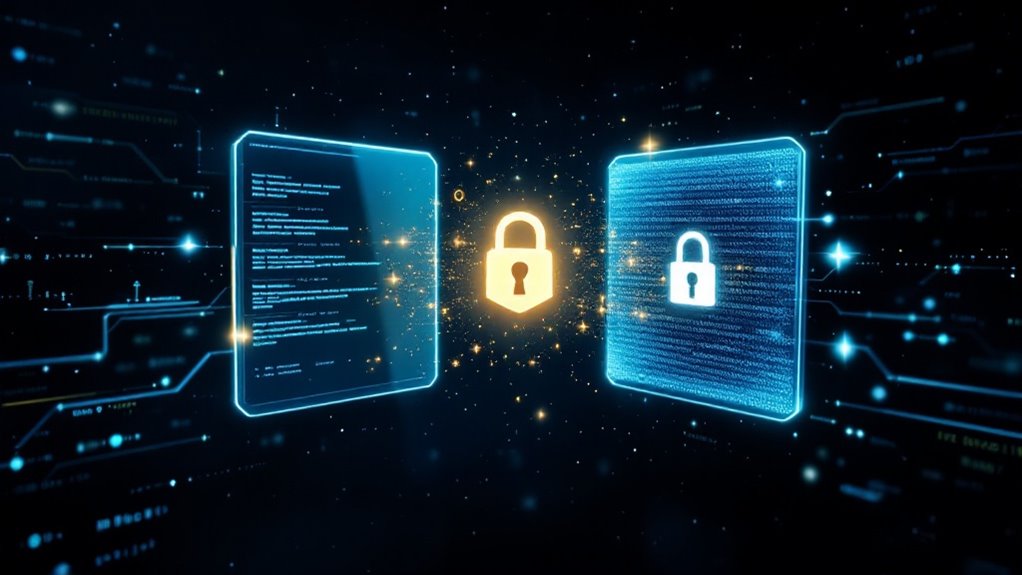
Zero-knowledge proofs are indeed revolutionizing crypto privacy. They let users prove facts without revealing sensitive data—like showing you’re old enough to drink without exposing your birthdate. Originally academic concepts, ZKPs now power projects worth over $21 billion. Protocols like zk-STARKs offer quantum resistance while supporting private transactions on public blockchains. Applications extend beyond crypto to voting systems, smart contracts, and identity verification. The privacy-transparency paradox may finally have its solution.
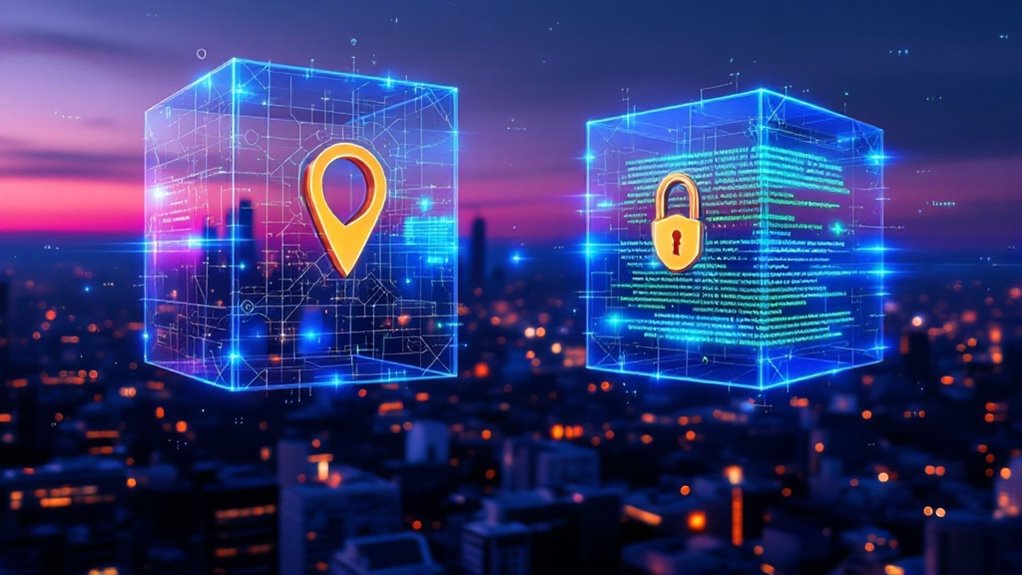
Cryptography just got a whole lot sneakier. Zero-knowledge proofs (ZKPs) are changing the game in blockchain technology by letting users prove something’s true without spilling any extra details. Think of it as telling someone you’re old enough to drink without showing your ID. Pretty clever, right?
These cryptographic methods aren’t new kids on the block. Introduced back in the 1980s, ZKPs only recently found their groove with cryptocurrency. Now they’re everywhere. Over 40 ZK crypto projects boast a combined market cap exceeding $21 billion. Not exactly pocket change.
Unlike traditional encryption, ZKPs don’t require revealing data once it’s decrypted. This distinction matters. Zcash demonstrates this perfectly by concealing who sent what to whom and how much. Private transactions on a public blockchain. Revolutionary stuff.
Zero-knowledge proofs give us the cryptographic magic we’ve always needed—verifiable trust without sacrificing privacy on public ledgers.
ZKPs rest on three pillars: completeness, soundness, and zero-knowledge. In human terms? They work, they’re trustworthy, and they keep secrets. Bitcoin implements a version of this technology through Merkle trees that allow efficient verification of transaction data. This trifecta makes them ideal for blockchain applications where privacy matters but transparency is still sacred. Furthermore, zero-knowledge proofs are crucial for protecting sensitive data in industries like finance and healthcare.
The protocols behind these proofs—zk-STARKs and zk-SNARKs—offer fast verification times and shorter proofs. zk-STARKs even provide quantum resistance. Future-proofing at its finest.
Beyond cryptocurrency, ZKPs are reshaping other systems. Voting mechanisms can now verify votes without revealing choices. Smart contracts can execute privately while maintaining trust. Real estate transactions can hide sensitive details like sale prices. Projects like Aleph Zero prioritize enterprise privacy while allowing confidential transactions on public blockchains.
Even identity verification gets an upgrade—proving you’re a citizen without revealing your entire life story. Supply chains and IoT security stand to benefit next. The applications seem endless.
ZKPs solve the fundamental paradox of blockchain: how to be both transparent and private. As 2024 unfolds, adoption continues to rise. Privacy concerns aren’t going away. Neither is the need for scalability.
Frequently Asked Questions
How Do Zero-Knowledge Proofs Affect Blockchain Scalability?
Zero-knowledge proofs dramatically boost blockchain scalability. They’re game-changers. By bundling multiple transactions into a single proof, they reduce on-chain data considerably. Less congestion, more throughput.
ZK-Rollups process thousands of transactions per second off-chain while maintaining security. The main blockchain only verifies the proof, not every transaction. Users enjoy faster confirmations and lower fees.
Projects like StarkNet and zkSync are already implementing this tech. Efficiency without sacrificing security. Pretty neat trick.
What Programming Languages Are Used to Implement Zero-Knowledge Proofs?
Developers aren’t spoiled for choice when it comes to implementing zero-knowledge proofs.
Circom dominates for writing circuits with quadratic expressions.
Halo2 offers more flexibility with polynomial constraints.
Rust gets picked for its performance and safety features.
C++ delivers efficiency for those who need control.
Python works for prototyping.
Each language serves different needs in the ZK ecosystem.
No single perfect option—just tradeoffs depending on the project’s requirements.
Can Quantum Computing Break Zero-Knowledge Proof Systems?
Quantum computing can indeed threaten some zero-knowledge proof systems.
zk-SNARKs, which rely on elliptic curve cryptography, are particularly vulnerable. Not a great look.
Hash-based proofs, however, offer better quantum resistance.
Current quantum computers aren’t powerful enough to break modern encryption standards yet, but that’s changing.
NIST recommends migration to post-quantum standards by 2035.
The race is on – develop quantum-resistant cryptography or watch privacy systems crumble when quantum computing matures.
How Do Zero-Knowledge Proofs Compare to Other Privacy Technologies?
Zero-knowledge proofs differ fundamentally from alternatives.
While federated learning keeps data local during model training, ZKPs verify statements without revealing information.
Differential privacy? It adds noise to data—effective but degrades utility.
Secure computation protects inputs during processing but demands heavy computational resources.
ZKPs excel at verification without disclosure.
The others? They’re about managing data or computation privacy.
Each has its niche. No single technology rules them all in the privacy world.
What Are the Regulatory Challenges Facing Zero-Knowledge Proof Adoption?
Regulatory challenges for zero-knowledge proofs? There’s plenty. Existing financial frameworks just don’t fit decentralized systems. Period.
Regulators want transparency, users demand privacy—good luck balancing that. The global patchwork of regulations complicates everything. Compliance officers are skeptical, naturally.
Trust issues with cryptographic setups don’t help either. International coordination? Almost non-existent.
The tech’s moving faster than laws can adapt. Regulators are scrambling to catch up while innovation barrels forward.
Zero-knowledge proofs offer a groundbreaking solution for enhancing digital asset privacy while maintaining the transparency benefits of blockchain technology.
Zero-knowledge proofs are transforming crypto monetary systems by enabling transaction verification without revealing sensitive user data or transaction details.
Zero-knowledge proofs enable users to verify transactions without revealing sensitive information about their crypto digital asset holdings or trading patterns.
Zero-knowledge proofs are transforming crypto monetary systems by enabling transactions that maintain complete privacy without sacrificing verification capabilities.