P2P Crypto Trading: Benefits and Risks Explained
P2P crypto trading connects buyers and sellers directly, no middlemen needed. Benefits include lower fees, enhanced privacy, and flexibility with payment methods. Not all sunshine though. Scammers lurk in these waters, counterparty risks are real, and liquidity can be an issue. Most platforms offer escrow services and rating systems to mitigate risks. Still beats traditional exchanges for many crypto rebels. The devil’s in the details of choosing trustworthy trading partners.
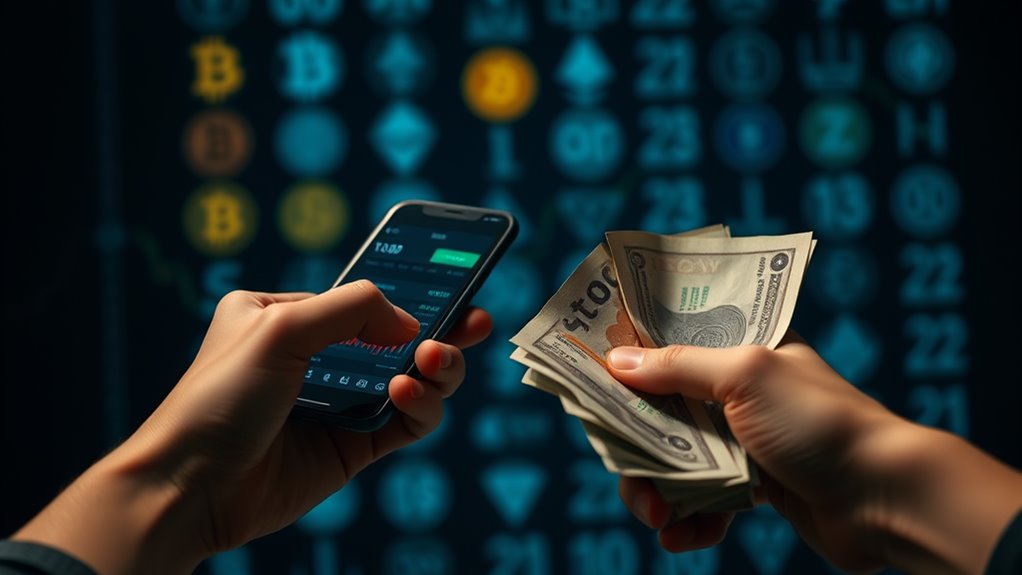
While traditional financial systems keep throwing up barriers, peer-to-peer cryptocurrency trading has emerged as a rebellious alternative for digital asset enthusiasts. These platforms connect buyers and sellers directly, cutting out the middleman and his greedy hands. Users can trade with people from Tokyo to Timbuktu without breaking a sweat.
Need to use your local payment app that big exchanges won’t touch? P2P’s got you covered.
The benefits are considerable. Global accessibility means traders can interact with peers worldwide, laughing in the face of geographical restrictions. Payment options? Take your pick. Traditional banking, digital wallets, cash—whatever floats your boat.
And the fees? They’re often considerably lower than centralized exchanges. No surprise there. When you’re not paying for fancy offices and executive bonuses, costs tend to drop. Additionally, lower fees can lead to higher profitability for traders, making P2P trading an attractive option.
Privacy is another major plus. Trading directly with another human means less personal information floating around in corporate databases. P2P platforms offer enhanced security through encryption and authentication methods that protect user data.
And flexibility? Users can customize their offers with discounts or specific payment terms. Try getting that kind of service from a faceless exchange.
But it’s not all sunshine and rainbows. The absence of intermediaries opens the door to fraud. That stranger promising amazing rates might just be waiting to disappear with your funds. Counterparty risk is real, folks.
And liquidity can be an issue—good luck finding immediate buyers for your obscure altcoin on smaller platforms.
Regulatory concerns loom large too. Many P2P exchanges operate in gray areas of the law. Today’s legal platform could be tomorrow’s banned service.
Oh, and don’t forget market volatility. Prices swing wildly while you’re in mid-transaction. Not fun.
Smart traders use escrow services, which hold assets until both parties complete their ends of the deal. They also rely on platform rating systems to evaluate potential trading partners. These user reviews and ratings create a community-based trust system that helps identify reliable trading partners.
Encryption and authentication add extra security layers.
In the end, P2P trading offers freedom but demands responsibility. The training wheels are off. Ready to ride?
Frequently Asked Questions
How Do I Verify a P2P Trader’s Legitimacy Before Transacting?
Verifying P2P trader legitimacy? Check their KYC status first. Real traders have verified profiles. Period.
Review their transaction history and ratings—numbers don’t lie. Use platform escrow services, never go off-platform (seriously, just don’t).
Enable 2FA protection. Communicate clearly and watch for red flags like pressure tactics or too-good-to-be-true offers.
Suspicious behavior? Report it. The crypto world’s full of sharks, verification’s your life jacket.
What Payment Methods Are Typically Accepted in P2P Crypto Trading?
P2P crypto trading platforms typically accept a wide range of payment methods.
Bank transfers remain popular—reliable but sometimes slow. Cryptocurrency transfers are obvious choices. Cash works for in-person deals, though risky.
Digital wallets like PayPal, Skrill, and Neteller offer convenience with varying fees. Gift cards are surprisingly common. Credit/debit cards work on some platforms.
Payment options often vary by region and platform. Different methods balance speed, fees, privacy, and security differently. No perfect solution exists.
Are P2P Trading Fees Lower Than Centralized Exchanges?
Yes, P2P trading fees are generally lower than centralized exchanges.
No middlemen means fewer hands in your crypto pocket. While centralized exchanges typically charge 0.1% to 0.6% per trade plus withdrawal fees, P2P platforms often eliminate these entirely.
Direct buyer-to-seller transactions cut costs dramatically. Sure, payment methods might incur some fees, and price volatility exists.
But the bottom line? Your crypto goes further when you skip the corporate exchange toll booth.
How Long Does a Typical P2P Transaction Take to Complete?
P2P transaction times vary wildly. Most complete within 15 minutes to 6 hours, depending on the seller’s payment window settings.
Network congestion can slow things down. No surprise there. Payment methods matter too—bank transfers take longer than instant options.
User responsiveness is huge; if someone’s slow to confirm, you’re stuck waiting.
Platform efficiency plays a role as well. Some exchanges are quick, others… not so much. That’s just how it goes.
Can I Use P2P Platforms in Countries With Crypto Restrictions?
P2P platforms can be used in countries with crypto restrictions, but it’s risky business.
Users leverage these platforms as workarounds in places like China, India, and Egypt. While they provide access where traditional exchanges are banned, the legal consequences can be serious.
Regulations change fast. Security breaches happen. Scammers lurk everywhere. And authorities? They’re watching.
Some countries demand AML and KYC compliance, others have total bans. Use at your own peril.
P2P trading has emerged as a fundamental component of crypto monetary systems, enabling direct exchanges between users without traditional intermediaries.
P2P crypto trading represents a shift toward decentralized monetary systems crypto enthusiasts envision as alternatives to traditional banking infrastructure.