Securing Your Crypto: What Is a Cold Wallet?
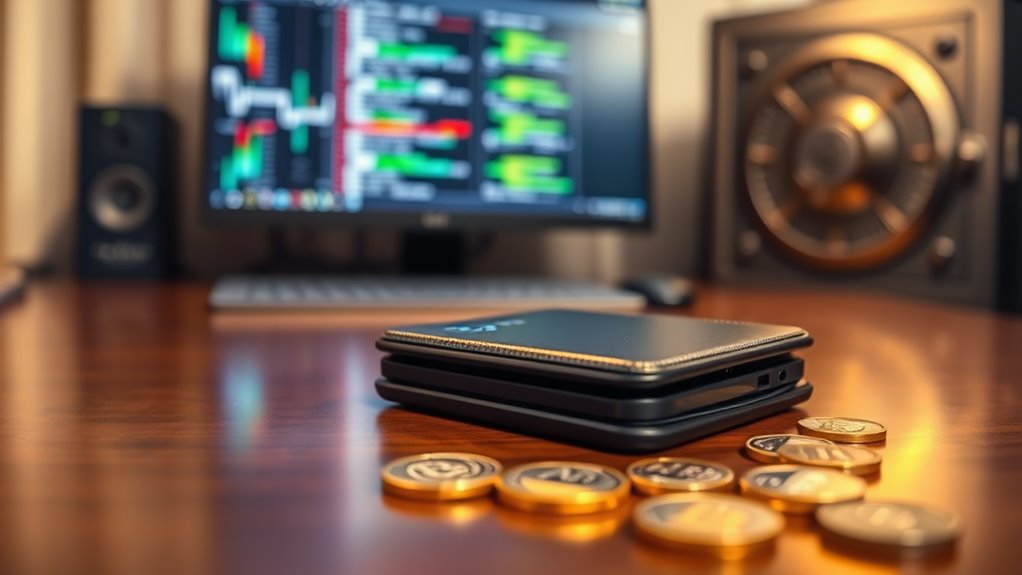
A cold wallet stores crypto private keys completely offline. Zero internet connection means hackers can’t touch your digital fortune. Types include hardware devices (like Ledger or Trezor), paper wallets, and air-gapped computers. Think of it as a secret vault versus hot wallets‘ convenience-first approach. Cold storage works best for serious holdings you don’t need daily. Hot wallets for pocket change, cold wallets for the real treasure. Security comes at the cost of convenience, but your future self will thank you.
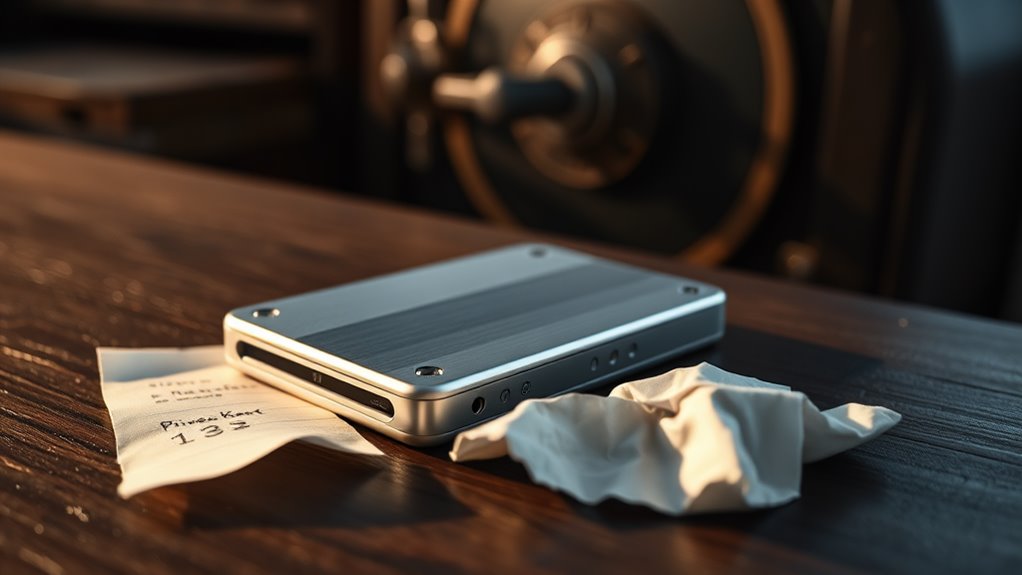
While online hackers grow increasingly sophisticated, crypto investors are turning to cold wallets as their digital Fort Knox. These offline storage solutions keep private keys—the passwords to your crypto kingdom—completely disconnected from the internet. No internet connection means no remote hacking. Simple as that.
Cold wallets come in several flavors. Hardware wallets like Ledger and Trezor are the gold standard—small physical devices that look like fancy USB sticks but cost a lot more. They are specifically designed to store private keys offline, providing cold storage that significantly reduces hacking risks. Paper wallets are basically printouts of your keys on actual paper. Old school, cheap, but not exactly durable. Spill your coffee once, and your millions are gone. Some paranoid types even use air-gapped computers—machines that have never touched the internet. Extreme? Maybe. Effective? Absolutely.
The paranoid survive in crypto: hardware for the cautious, paper for the brave, air-gapped machines for the truly obsessed.
The appeal is obvious when compared to hot wallets. Hot wallets live online—on exchanges or apps—making them convenient but vulnerable. Like keeping your money in your front pocket while walking through a sketchy neighborhood. Cold wallets, meanwhile, are like that secret compartment behind your bookshelf. Less accessible, but much safer. They’re ideal for long-term holdings where security trumps convenience for assets you rarely need to access.
The security benefits are substantial. No malware, no phishing risks, no accidental approvals of sketchy smart contracts at 3 AM. Your private keys stay private because they never go online. Period. Cold wallets use Elliptic Curve Digital Signature algorithms to generate their secure keys, providing mathematical protection that’s virtually unbreakable when kept offline.
Of course, nothing’s perfect. Hardware wallets can break, get lost, or be destroyed. Setup can be confusing for crypto newcomers. And when you want to make a transaction? You’ll need to connect that cold wallet temporarily—a minor inconvenience that feels major when markets are moving fast.
Most significant crypto holders use both options strategically. Hot wallets for small amounts and frequent trading. Cold storage for the serious money—the funds you can’t afford to lose. Because in the wild west of cryptocurrency, sometimes the best technology is the one that stays offline.
Frequently Asked Questions
How Much Do Cold Wallets Typically Cost?
Cold wallets typically cost between $50 and $400.
Budget options like SafePal S1 ($49.99) and KeepKey ($49) won’t break the bank.
Mid-range? Ledger Nano X runs $149, while Trezor Model T hits $169.99.
For the fancy folks, Ledger Stax commands $399.
Pricing varies with features.
Want better security, famous brands, or pretty screens? You’ll pay more.
Bluetooth connectivity? That’ll cost extra too.
Simple as that.
Can Cold Wallets Be Hacked Remotely?
Cold wallets can’t be hacked remotely in the traditional sense. Their entire purpose is staying offline. No internet connection, no remote attack vector. Simple.
But nothing’s perfect. Vulnerabilities exist in the hardware itself, supply chain compromises, or malicious firmware updates. Some attackers have exploited electromagnetic radiation from devices.
The biggest security threats? Human error and physical access. Someone gets your device and PIN? Game over. Your crypto’s gone, buddy.
What Happens if I Forget My Cold Wallet Password?
Forgetting a cold wallet password doesn’t mean funds are gone forever. Users can restore access using their recovery seed phrase—those 12-24 words they were supposed to write down and store safely.
No seed phrase? Big problem. Some wallets offer PIN reset procedures or customer support options, but without proper backup, it’s basically game over.
Physical damage complicates things further. Crypto security is serious business. No password, no seed phrase equals no crypto. Simple as that.
How Often Should I Update My Cold Wallet Firmware?
Cold wallet firmware updates aren’t a strict schedule game.
Here’s the deal: update when manufacturers release new patches or security improvements. Simple as that. Some wallets, like Tangem, never need updates—they’re factory-set. Others require occasional patching.
Security vulnerabilities don’t follow calendars.
Check manufacturer websites quarterly or subscribe to their alerts. And please, only download official updates. Hackers love amateurs who’ll install anything from sketchy sources.
Can I Store Multiple Cryptocurrency Types in One Cold Wallet?
Yes, most cold wallets support multiple cryptocurrencies simultaneously. It’s one of their main selling points.
Users can store Bitcoin, Ethereum, Litecoin, and dozens of other digital currencies on a single device. No need for separate wallets – efficient!
Different hardware models support different numbers of assets, though. Some handle hundreds, others just a handful.
Check the manufacturer’s specifications before buying. Multiple assets, one secure storage solution. Pretty convenient, actually.
A cold digital asset storage solution keeps your cryptocurrency completely offline, protecting it from online hackers and cyber threats.
Understanding proper security measures is essential for anyone participating in crypto monetary systems, where digital assets require protection from online threats.
As crypto monetary systems continue to evolve, protecting your digital assets with proper storage solutions becomes increasingly critical for investors.