Crypto Mining: How Digital Currencies Are Created
Crypto mining creates digital currencies through a high-tech puzzle race. Computers compete to solve complex mathematical problems, validating transactions and compiling them into blocks for the blockchain. Miners prioritize higher-fee transactions first—like a digital VIP line. Originally done on regular computers, mining now requires specialized hardware (ASICs) and massive electricity. It’s basically thousands of machines burning power to make internet money. The environmental impact? Not pretty. Stick around for the dirty details.
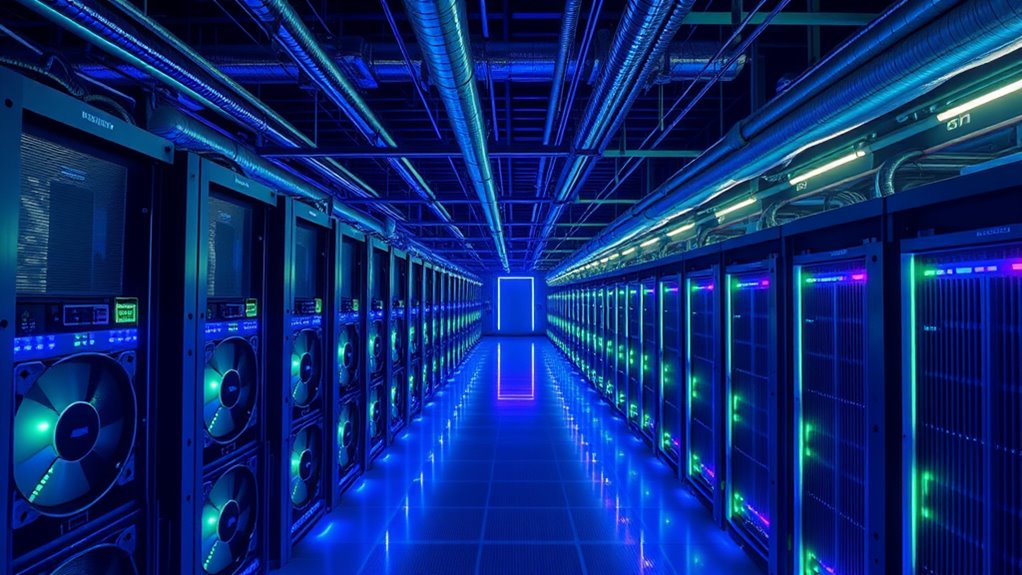
The digital gold rush. Thousands of computers worldwide, humming away, solving complex mathematical puzzles just to create internet money. Yeah, that’s crypto mining summed up. Behind the scenes, it’s a bit more technical than that.
Miners pick up pending transactions from something called a mempool and check if they’re legitimate. Not just any transactions make the cut – those with higher fees get priority because block space is limited. Simple economics.
Transactions compete for limited block space. Higher fees jump the queue—cryptocurrency’s own little VIP line.
Once miners have their transactions, they compile them into a block. Then comes the weird part. They hash these transactions in pairs, over and over, until they get one single value called a Merkle root. It’s like repeatedly folding a piece of paper until it becomes impossibly small.
Now for the heavy lifting. Miners must solve a puzzle by finding a magic number (the nonce) that creates a hash meeting the network’s difficulty target. It’s basically guessing numbers until something works. Sounds inefficient? It is. That’s the point.
When they finally crack it, they broadcast their solution to the network. If everyone agrees it’s valid, the block joins the blockchain. Congrats, new crypto has been created. This process also helps to prevent fraud by securing the blockchain through the computational work performed.
The hardware behind this process has evolved dramatically. Bitcoin mining started on regular computers with CPUs – ancient history now. Miners quickly moved to graphics cards (GPUs), then to specialized chips called FPGAs, and finally to ASICs, which do nothing but mine cryptocurrency. Really. These machines have one job.
This evolution has made mining incredibly energy-intensive. The electricity bill alone would make your eyes water. Individual miners? They’re getting squeezed out. The costs are brutal – constant hardware upgrades and enough electricity to power a small country. Some operations use up to 0.90% of global electricity annually, which explains why certain countries have banned mining activities altogether.
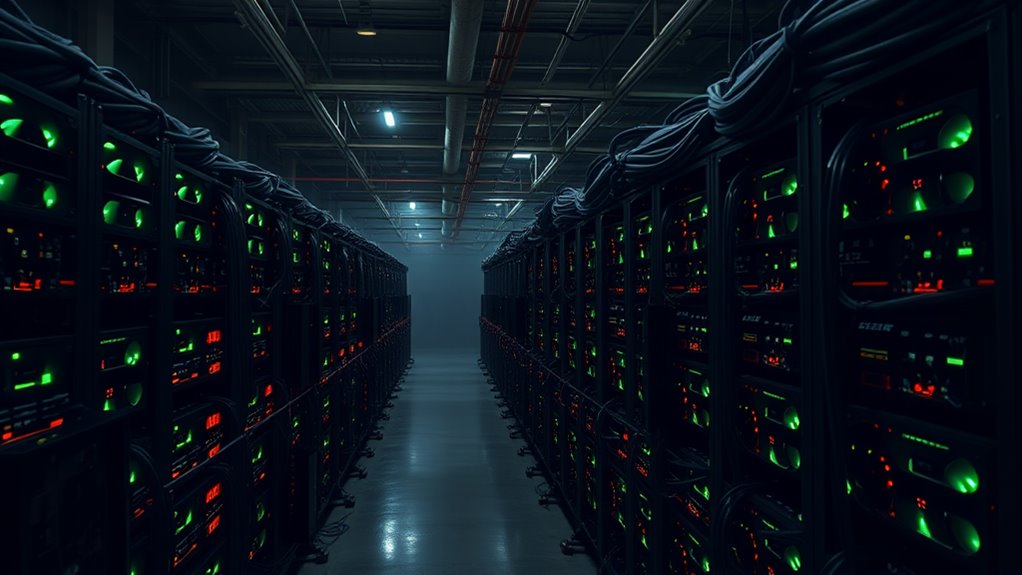
Mining has become an industrial operation, with warehouse-sized facilities dedicated to creating digital money. Not exactly the decentralized utopia some envisioned.
Frequently Asked Questions
Is Crypto Mining Legal in All Countries?
Crypto mining isn’t legal everywhere. Period. While Canada and the U.S. generally welcome miners, China slammed the door shut completely in 2021.
Some countries like Portugal actually attract miners with zero-percent tax rates. Others? Bangladesh, Nepal, Qatar – total bans.
Most nations exist in a regulatory gray zone with no specific laws. It’s a patchwork mess globally. Some places tolerate it, others tax it, and a few criminalize it entirely.
How Much Electricity Does Mining Typically Consume?
Crypto mining is an electricity hog. Bitcoin alone consumes between 91-178 TWh annually—comparable to entire countries like Finland.
Each Bitcoin transaction? A whopping 851.77 kWh, equivalent to what an average U.S. household uses in a month.
Mining facilities typically run at 80% capacity, gulping down about 70 TWh yearly in the U.S. alone.
Meanwhile, a Visa transaction needs just 0.4 kWh. The difference is staggering, honestly.
Can Mining Damage Your Computer Hardware?
Yes, mining can absolutely wreck computer hardware. Continuous operation creates excessive heat that damages GPUs and circuit boards. Fans fail. Thermal paste dries out. Poor cooling equals dead components, simple as that.
Electrical issues like power surges and cable damage present serious fire hazards. Consumer-grade hardware wasn’t built for 24/7 punishment.
Mining rigs in makeshift setups face additional risks from dust, humidity, and inadequate ventilation. Gaming PCs repurposed for mining? They’re basically on death row.
What Happens to Mining After All Coins Are Mined?
After all bitcoins are mined (around 2140), miners will shift entirely to transaction fees.
No more block rewards. Period.
They’ll prioritize higher-fee transactions, potentially creating a competitive fee market.
Security will depend on these fees being profitable enough to keep miners interested.
Layer 2 solutions like Lightning Network might handle daily transactions, reducing blockchain congestion.
The whole system moves from inflation-based to service-based compensation.
Mining continues – just with different economics.
Bitcoin becomes purely deflationary.
Are Some Cryptocurrencies Easier to Mine Than Others?
Yes, some cryptocurrencies are definitely easier to mine than others.
It’s all about hash rate and algorithm. Lower hash rate networks face less competition.
Bitcoin? Nearly impossible for average folks now.
ASIC-resistant coins like those using RandomX are more accessible to regular computers.
Algorithm matters too – memory-intensive ones shut out specialized hardware.
Newer, smaller coins are typically easier targets.
Mining difficulty varies wildly between cryptocurrencies.
Economics 101: less competition equals easier mining.
Digital asset mining involves using computational power to solve complex mathematical problems that validate transactions and create new cryptocurrency tokens.
Cryptocurrency mining serves as the backbone that validates transactions and maintains the security of modern digital monetary systems worldwide.
Digital asset mining involves using computational power to solve complex mathematical problems that validate transactions and create new cryptocurrency tokens.
Cryptocurrency mining serves as the backbone that secures and validates transactions within these revolutionary digital monetary systems.