What Is the Most Stable Cryptocurrency in 2025?
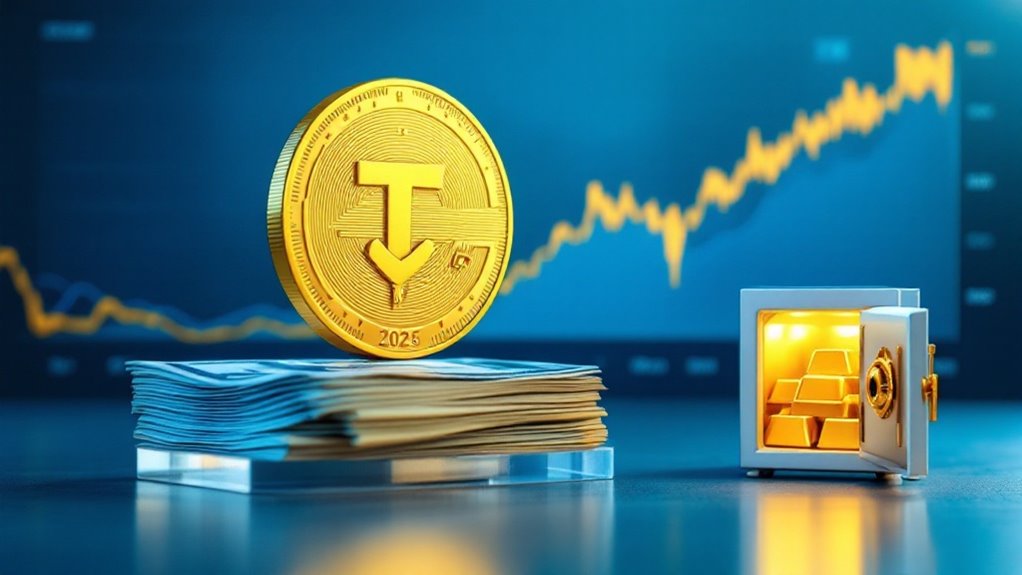
Stablecoins remain the steadiest crypto options in 2025, with Tether (USDT) dominating at $142 billion market cap despite transparency concerns. USD Coin (USDC) offers better regulatory compliance with $29 billion capitalization. Alternative options include decentralized DAI, gold-backed PAXG, and PayPal’s PYUSD. Each serves different investor needs in the volatile crypto landscape. No single “most stable” exists—it depends on your priorities. The details reveal which might actually be worth your trust.
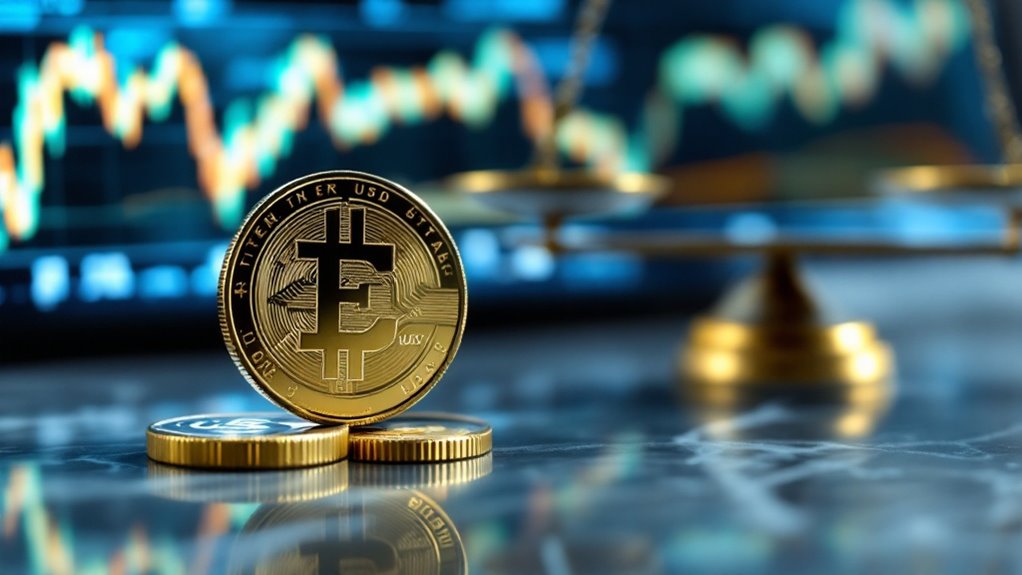
While the cryptocurrency market remains a wild rollercoaster of volatility, stablecoins stand apart as the steady pillars in a chaotic digital landscape. Not all stablecoins are created equal, though. Some shine brighter than others in the stability department. Let’s face it—crypto investors need somewhere safe to park their money when things get messy.
Tether (USDT) continues its reign as the dominant force with a massive $142 billion market cap. It’s everywhere. Everyone uses it. The liquidity is unmatched, and its daily trading volume exceeds $21 billion. Pretty impressive for a token that’s faced more scrutiny than a politician’s tax returns. Despite the ongoing debates about its reserve mix, USDT publishes daily updates on its backing. Not transparent enough? Maybe. But the market doesn’t seem to care.
Tether dominates the stablecoin arena, despite its controversies. The market speaks louder than scrutiny with $142 billion behind it.
USD Coin (USDC) offers a cleaner alternative for the regulation-conscious crowd. At $29 billion market cap, it’s the responsible younger sibling to USDT. Its reserves undergo regular audits and are held in regulated institutions. Boring? Yes. Reliable? Absolutely. This transparency has made it increasingly popular for cross-border transactions which require minimal friction and maximum trust. USDC has earned its reputation through strong compliance with regulatory requirements, making it a top choice for institutional investors seeking stability.
DAI stands out as the rebel in the stablecoin family—decentralized and over-collateralized by crypto assets. No single entity controls it. Great for DeFi enthusiasts, but the algorithmic nature introduces its own risks. Nothing’s perfect.
For those worried about inflation eating away their savings, Pax Gold (PAXG) offers a unique proposition. Each token equals one troy ounce of gold. Real gold. In vaults. Audited regularly. Old-school value meets new-world technology.
PayPal USD (PYUSD) leverages the payment giant’s infrastructure, bringing mainstream credibility to the stablecoin space. Dollar-backed and integrated with PayPal’s services, it’s the newcomer trying to bridge traditional finance and crypto.
The most stable cryptocurrency depends on what you value most: market dominance, regulatory compliance, reserve transparency, or inflation protection. Investors should carefully research a stablecoin’s historical performance before investing to ensure it meets their specific risk tolerance.
But one thing’s certain—in the volatile crypto ocean of 2025, stablecoins remain the life rafts everyone clings to.
Frequently Asked Questions
How Do Regulatory Changes Impact Cryptocurrency Stability?
Regulatory changes can make or break crypto stability.
Clear frameworks like EU’s MiCA boost investor confidence.
Fragmented rules? Recipe for volatility.
Stablecoin scrutiny has actually improved stability through reserve transparency requirements.
Audits matter. Period.
Regulatory sandboxes in APAC foster innovation while managing risks.
Meanwhile, China’s crackdown creates market turbulence.
The bottom line: predictable regulation equals stable markets.
Chaotic oversight? Markets crash. Simple as that.
What Technical Factors Determine a Cryptocurrency’s Long-Term Stability?
Technical factors that determine a cryptocurrency’s long-term stability include network effects, transaction volume, and blockchain infrastructure reliability.
Robust security mechanisms prevent attacks. Scalability solutions—like Bitcoin’s Lightning Network—boost practical utility. Interoperability with other chains matters too.
Let’s face it: energy efficiency isn’t just for tree-huggers anymore; it affects institutional adoption.
Smart contract functionality either enhances utility or creates new attack vectors. The quality of code matters. No surprises there.
Are Stablecoins Safer Investments Than Traditional Cryptocurrencies?
Stablecoins offer lower volatility than traditional cryptocurrencies. That’s their whole point. Pegged to fiat currencies (usually USD), they’re designed for stability while Bitcoin and others swing wildly.
Less exciting? Sure. But they carry different risks – counterparty concerns, depegging disasters, and regulatory headaches. Remember TerraUSD’s 2022 collapse? Not so stable after all.
They’re safer from price swings but introduce centralization vulnerabilities. Perfect for traders needing stability, terrible for those chasing crypto’s famous gains.
Can Central Bank Digital Currencies Replace Private Stablecoins?
CBDCs could technically replace stablecoins, but it’s unlikely.
Central banks move slow. Stablecoins already dominate with $200B in circulation compared to CBDCs‘ measly trials. Trump’s administration opposes retail CBDCs anyway.
The reality? They’ll probably coexist.
CBDCs for institutional settlements, stablecoins for private transactions and blockchain innovation. Different tools, different purposes.
Governments want control; crypto users want freedom. Classic standoff. Neither side will fully surrender their turf.
How Do Geopolitical Events Affect Cryptocurrency Stability?
Geopolitical events hit crypto markets like a sledgehammer. Period.
When nations clash, digital assets wobble. Political instability triggers panic selling, while sanctions actually boost adoption in countries trying to dodge financial restrictions.
Russia’s been there, done that.
Cryptocurrency markets react instantly to global tensions—often more dramatically than traditional markets.
Tariffs? Price drops. War? Volatility spikes. Central banks developing their own digital currencies? More market uncertainty.
Crypto stability and world politics? Completely inseparable.
Finding the most stable digital asset requires analyzing price volatility, market capitalization, and adoption rates across different cryptocurrencies.
Investors seeking reliable digital assets often look to cryptocurrencies that mirror the characteristics of stable monetary systems found in traditional finance.
As global economies evolve, investors increasingly seek cryptocurrencies that can function as reliable components of stable monetary systems.