What Is Gold Bullion and How Does It Compare to Bitcoin?
Gold bullion is physical investment metal in bars or coins with strict purity standards. Bitcoin? Just digital code. Gold’s been around for thousands of years, providing stability during economic chaos. Bitcoin appeared in 2009—volatile but with a fixed supply cap of 21 million. Gold needs safes; Bitcoin needs passwords. One you can hold, one you can’t. Both buck traditional currency systems. The real differences? They’re deeper than you think.
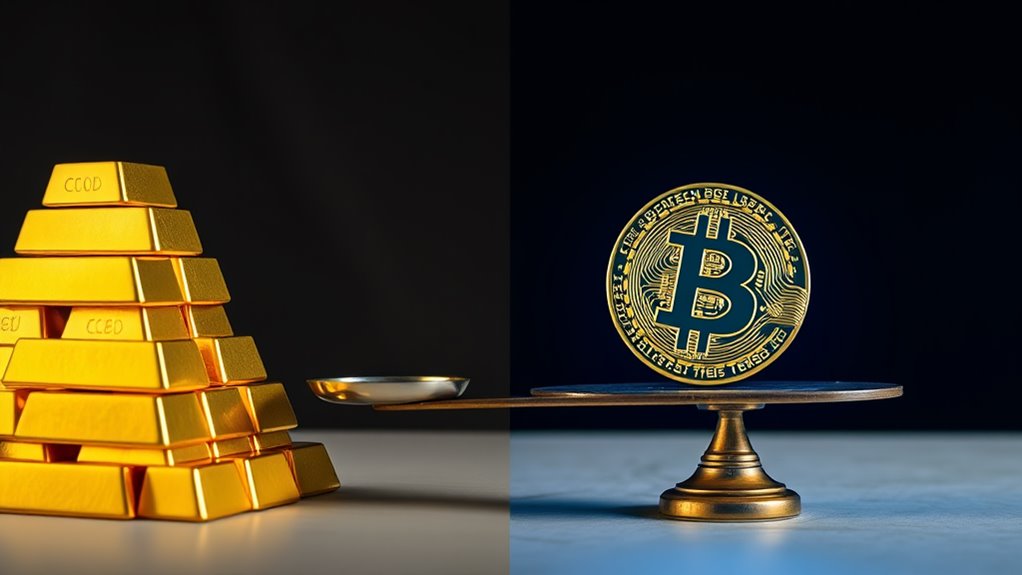
While gold has been humanity’s go-to store of value for thousands of years, Bitcoin has crashed the party with all the subtlety of a digital wrecking ball. Gold bullion represents physical investment-grade gold, typically bars or coins containing at least 99.5% purity for bars and 90% for coins.
Bitcoin? Just strings of code. No physical form whatsoever.
Gold’s value comes from its weight and purity. Simple. Bitcoin’s worth is whatever people decide it is on any given day. Gold bars come in various sizes, from tiny 1-gram pieces to massive 400-troy-ounce chunks that would break your foot if dropped.
Gold offers tangible weight and certainty. Bitcoin? Just the collective fever dream of digital believers.
Meanwhile, Bitcoin has a hard cap of 21 million. That’s it. Forever.
Stability has been gold’s calling card for centuries. It’s the reliable friend who shows up when everything else falls apart.
Bitcoin is that unpredictable acquaintance who might make you rich or leave you broke. Your call.
Storage differences? Night and day. Gold needs physical space—vaults, safes, that hollow book on your shelf that isn’t fooling anyone.
Bitcoin exists in digital wallets with fancy encryption. Gold thieves need a getaway car. Bitcoin thieves need coding skills.
Looking at historical context, gold has cultural significance stretching back to ancient civilizations. Many gold coins are considered legal tender status with nominal values that add to their appeal.
Bitcoin has existed since 2009. Not exactly a legacy.
Risk factors differ dramatically too. Gold faces counterparty risks if you’re not literally sleeping on your bullion.
Bitcoin? Regulatory uncertainty, hacking vulnerabilities, and the chance that everyone simply loses interest.
Market dynamics reveal another contrast. Gold responds to inflation, dollar strength, and geopolitical chaos.
Bitcoin reacts to tweets, adoption rates, and regulatory whispers.
In terms of total value, gold’s estimated worth of all mined supply stands at approximately 12.25 trillion dollars, dwarfing Bitcoin’s market capitalization.
Gold is often used as a hedge against inflation during periods of economic instability.
Here’s the brutal truth: gold isn’t going anywhere. It survived empires, wars, and economic collapses.
Bitcoin is the new experiment that might revolutionize finance—or become a cautionary tale in digital economics textbooks.
Both have their devotees. Both have their critics.
Choose your shiny object accordingly.
Frequently Asked Questions
How Do I Store Gold Bullion Safely at Home?
Storing gold bullion safely requires multiple precautions. Homeowners should invest in a quality fireproof safe, bolted to the floor.
Discretion is essential – nobody needs to know about that shiny stash except one trusted confidant. Keep it dry, away from chemicals.
Separate gold from silver. Smart folks use protective containers and check their precious metals regularly.
Most home insurance won’t cover it. That’s just reality. Some bury it. Not exactly convenient for weekend trading, though.
What Fees Are Involved When Buying Gold Bullion?
Buying gold bullion hits your wallet in multiple ways.
Transaction fees start at $44 minimum. Then there’s tiered buying fees—2.90% for smaller purchases, dropping to 0.99% for $100k+.
Don’t forget purchase premiums covering fabrication, transportation, and dealer commissions. Those sneaky premiums push prices above spot value.
Storage fees? 1.50% for smaller accounts.
Physical gold also means opportunity costs—money sitting in metal instead of growing elsewhere. Not exactly a free lunch.
Are There Gold Bullion ETFS for Stock Market Investors?
Yes, gold bullion ETFs exist specifically for stock market investors. These investment vehicles track physical gold prices without requiring actual storage.
Popular options include SPDR Gold Shares (GLD) with its 0.40% expense ratio and Franklin Responsibly Sourced Gold ETF (FGLD) at 0.15%. They trade like regular stocks. Investors get gold exposure without the hassle of vaults or insurance.
Bonus: they’re liquid—sell anytime the market’s open. No need to find a gold dealer. Pretty convenient.
How Is Gold Bullion Taxed in Different Countries?
Gold bullion taxation varies dramatically worldwide.
France imposes a 10.5% tax with exemptions after 22 years.
Italy charges 6-12.5% depending on investor type.
The UK hits investors with 18% CGT, while Ireland demands a hefty 25%.
VAT?
Germany slaps 19% on purchases.
Switzerland? Zero VAT on investment-grade gold. Smart move.
Some countries offer quirky breaks.
UK’s legal tender coins escape CGT completely.
Belgium doesn’t tax gold at all. Talk about a golden opportunity!
Can Gold Bullion Be Included in Retirement Accounts?
Gold bullion can be included in retirement accounts through specific vehicles called Gold IRAs.
These are self-directed IRAs that allow physical precious metals. Not just any gold works though – the IRS requires 99.5% purity for gold bullion.
Home storage? Forget it. Must be kept in IRS-approved depositories.
Contribution limits match regular IRAs ($7,000 for 2024). Early withdrawals face the same 10% penalty as traditional accounts.
Traditional and Roth options exist – different tax implications for each.
While gold bullion has been a store of value for centuries, the digital asset bitcoin has emerged as a modern alternative investment option.
Throughout history, gold monetary systems have provided stability and value preservation, making gold bullion an attractive alternative to volatile digital currencies like Bitcoin.
This comprehensive digital asset comparison will help investors understand the key differences between traditional precious metals and modern cryptocurrency investments.
Historically, gold monetary systems served as the backbone of international finance before modern fiat currencies and digital assets like Bitcoin emerged.