Gold Valuation: How to Price Crypto’s Precious Metal?
Gold valuation, unlike crypto, requires physical precision. Proper assessment depends on purity (measured in karats), weight (using reliable scales), and current market price. No bathroom scales allowed. Professional testing methods matter—acid tests, electronic analysis, X-ray fluorescence. Hallmarks need verification to catch fakes. Reports must include detailed descriptions and photos. Economic trends impact prices daily. Sentimental value? Banks couldn’t care less. More details await beneath the surface.
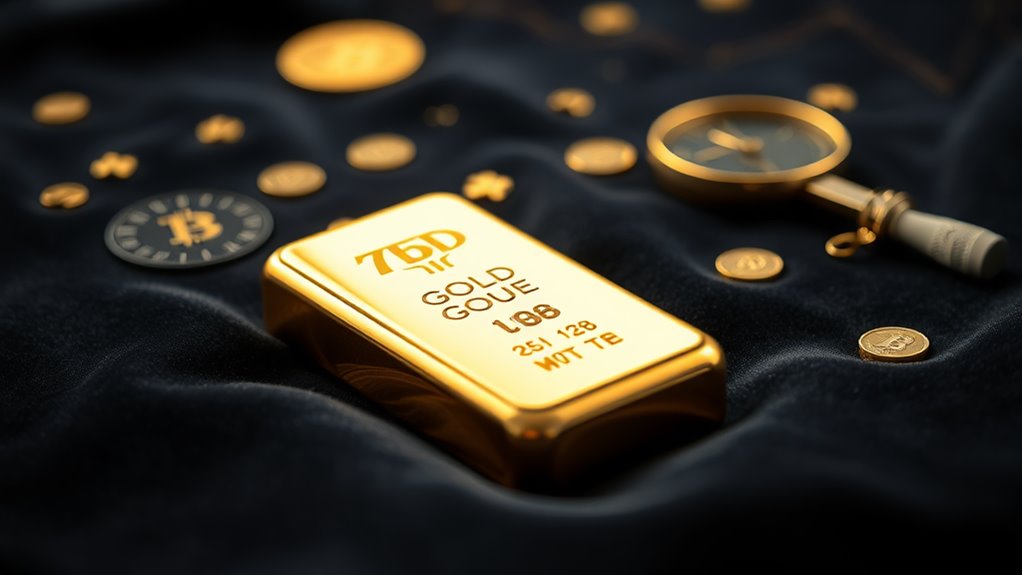
Gold Valuation
Treasure hunters, take note. Gold valuation isn’t some mystical art practiced by wizards in dark rooms. It’s science. Cold, hard numbers based on specific factors that determine what your shiny metal is actually worth. And yes, people get this wrong all the time.
The basics are simple enough. Gold’s value comes down to four main factors: purity, weight, current market price, and trends. That bracelet Grandma gave you? It’s probably not pure gold. Pure gold is 24 karats, and most jewelry is 18k or less. Why? Because pure gold is soft. Too soft for daily wear. Deal with it. Gold-backed cryptocurrencies offer a modern way to invest while maintaining exposure to gold’s value.
Pure gold looks pretty in a vault but would bend on your wrist. That’s why your jewelry is mixed with other metals.
Measuring gold requires precision. None of that bathroom scale nonsense. We’re talking troy ounces (about 31.1 grams) or grams, weighed on equipment that doesn’t lie. One gram off means dollars lost. Sometimes lots of dollars.
Testing purity isn’t just squinting at hallmarks. Professional valuations use acid testing, electronic analysis, or X-ray fluorescence. That “14K” stamp? Trust, but verify. Counterfeiters exist. They’re not your friends.
Gold prices change daily. Hourly, even. They dance to the tune of global economics, interest rates, and investor panic. That’s why valuation reports include dates. A report from last month? Practically ancient history.
For loans, gold becomes serious business. Banks don’t care about sentimental value. They care about collateral value, based on thorough reports. No proper valuation? No money. That’s just how it works.
Investors view gold differently. It’s their security blanket during economic meltdowns. Gold prices typically move opposite to stock markets. When everything else burns, gold often doesn’t. That’s its appeal.
Proper valuation reports are detailed affairs. They include descriptions, weights, purity percentages, market analysis, and the appraiser’s credentials. For complex financial analysis of gold investments, some experts recommend applying the Pomodoro Technique to maintain focus when reviewing market trends and valuation reports. Photos too. Everything documented, because when money’s involved, memories get selective.
Gold valuation isn’t rocket science. But it’s not guesswork either. It’s methodical, precise, and absolutely necessary if you want to know what your treasure is actually worth. No shortcuts. No exceptions. Antique pieces may command premium prices due to their historical and artistic value, especially when crafted by renowned designers or from significant time periods.
Frequently Asked Questions
What Affects Gold’s Price Beyond Traditional Valuation Metrics?
Gold’s price swings beyond traditional metrics due to emotion and market psychology.
Fear drives buyers during crises – doesn’t matter if it’s rational. Media hype amplifies these feelings.
Then there’s social perception – gold’s seen as prestigious, especially in certain cultures.
Technology changes matter too – new industrial uses emerge constantly.
Weather patterns affecting mining operations? Yep, that too.
Even celebrity endorsements move the needle sometimes.
Markets aren’t always logical, folks.
How Does Cryptocurrency Volatility Compare to Gold Price Fluctuations?
Cryptocurrency volatility dwarfs gold‘s price movements. Period. Bitcoin can swing 10-20% in a day. Gold? Maybe 1-2% on a wild day.
Bitcoin’s price history shows triple-digit annual fluctuations, while gold typically stays within more modest ranges. Market sentiment drives crypto’s rollercoaster, with tweets from tech billionaires sometimes causing massive shifts.
Gold’s established market and central bank involvement keeps it steadier. Less exciting? Sure. But that stability is exactly why investors flee to it during uncertainty.
Can Gold and Crypto Coexist in a Diversified Portfolio?
Gold and crypto absolutely can coexist in a diversified portfolio. They serve different purposes – gold as a stability anchor, crypto for growth potential.
Smart investors like the balance. Gold’s low correlation with traditional markets provides a safety net when things go south.
Meanwhile, crypto offers exposure to technological innovation. Sure, crypto’s volatile as hell, but that’s part of the appeal.
Different risk profiles, different return potentials. Together, they create a more resilient investment strategy. No-brainer, really.
Is Tokenized Gold as Secure as Physical Gold Ownership?
Tokenized gold and physical gold offer different security profiles.
Tokenized gold relies on blockchain tech, custodians, and digital infrastructure – all potential failure points.
Physical gold? You can literally hold it. No counterparty risk. But it can be stolen or lost.
Truth is, they’re secure in different ways.
Physical gold wins for independence from digital systems. Tokenized gold shines with transparent ownership records and reduced transport risk.
Pick your poison. Both have trade-offs.
How Do Geopolitical Tensions Specifically Impact Gold Versus Cryptocurrency Values?
Geopolitical tensions send gold and crypto in opposite directions.
Gold usually rises during crises – it’s the classic “panic asset.” Just look at past conflicts or economic meltdowns. Prices climb when people get scared.
Crypto? Much messier. Sometimes it jumps during geopolitical chaos (Ukraine war boosted Bitcoin briefly), but it’s wildly unpredictable.
Regulatory crackdowns can crush prices overnight. While gold benefits from stability-seeking behavior, crypto thrives on disruption, then crashes on regulation fears.
Understanding gold’s pricing mechanisms provides valuable insights that can be applied to digital asset valuation in the cryptocurrency market.
Understanding how traditional gold monetary systems functioned provides valuable insight into gold’s enduring role as a store of value in modern markets.
Understanding traditional gold valuation methods becomes crucial when evaluating digital asset gold investments in today’s evolving cryptocurrency marketplace.
Understanding how gold monetary systems historically functioned provides valuable insight into modern cryptocurrency valuation methods and precious metal pricing strategies.